














Top 5 PMOS (PCOS) Cookbooks That Actually Help You Eat for Your Hormones
If you've been told to "just eat healthily" for PMOS (PCOS), you already know how unhelpful that advice actually is. Healthy by whose definition? For which symptoms? With or without carbs, because even the internet can't agree?
You're not imagining it. Nutrition advice for PMOS (PCOS) is genuinely confusing, partly because the condition itself isn't one-size-fits-all, and partly because most mainstream diet advice wasn't designed with your endocrine system in mind.
That's where a genuinely good cookbook earns its place on your shelf: not as a magic fix, but as a practical, evidence-informed starting point. We've reviewed five of the best PMOS (PCOS) cookbooks available, what each one does well, who it's best suited to, and where it falls short.
New here? Get new research-led MyOva guides on hormones and cycles by email. Join the newsletter →
What Is PMOS? The Name Change You Need to Know About
PMOS, polyendocrine metabolic ovarian syndrome, is the new name for the condition previously known as PCOS (polycystic ovary syndrome), following a global consensus process published in The Lancet in May 2026.
After more than a decade of debate involving clinicians, researchers, and patients worldwide, the name change was published in a paper led by Professor Helena Teede at Monash University, backed by more than 50 international medical bodies [Teede et al., 2026].
The old name had a real problem: "polycystic ovary" implied cysts on the ovaries, when what actually shows up on ultrasound are arrested follicles, not cysts. That mismatch between name and biology is part of why PCOS was so often treated as a reproductive issue rather than the whole-body hormonal and metabolic condition it actually is.
The new name reflects that more accurately:
- Polyendocrine recognises that multiple hormonal systems are involved, not just one
- Metabolic names the insulin resistance and blood sugar dysregulation that sit at the heart of the condition for most women
- Ovarian keeps the ovaries in the picture without making them the whole story
The condition itself hasn't changed. Only the name has. If you've been searching for "PCOS cookbooks," you're in exactly the right place. Throughout this guide we use "PMOS (PCOS)" so nothing gets lost in translation.

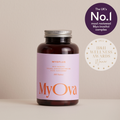
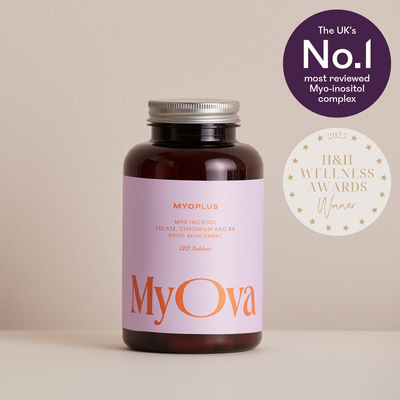
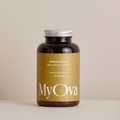
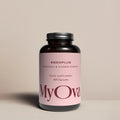
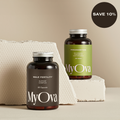
4000mg myo-inositol with chromium, which contributes to normal blood sugar regulation, and folate and B6 for normal hormonal activity.
Why Does Food Matter So Much for PMOS?
Food matters for PMOS (PCOS) primarily because of insulin resistance, a metabolic driver of symptoms in roughly half to seventy percent of women with the condition.
This is what I wish someone had told me early on: the reason dietary changes are so powerful for PMOS (PCOS) isn't about calories or willpower. It's about insulin.
Insulin moves glucose from your blood into your cells for energy. When your cells become resistant to insulin's signal, your pancreas compensates by producing more of it. High insulin then signals the ovaries to produce excess androgens, testosterone, which disrupts ovulation, contributes to acne, drives excess hair growth, and throws your cycle into chaos.
Research suggests that somewhere between 50-70% of women with PMOS (PCOS) have some degree of insulin resistance, including lean women who don't fit the typical "metabolic" picture [Diamanti-Kandarakis & Dunaif, 2012].
The research on this is actually pretty clear: dietary changes that stabilise blood sugar and reduce insulin load have a real, evidence-backed impact on PMOS (PCOS) symptoms. Better ovulation, more regular cycles, lower androgen levels, more stable energy, and clearer skin can all follow from eating differently.
Root cause, not symptom suppression. That's the whole point of this list.

What Should a Good PMOS Cookbook Cover?
A good PMOS (PCOS) cookbook addresses insulin resistance, inflammation, and blood sugar balance, not just generic "healthy eating."
Before the list, here's what to look for:
- Insulin and blood sugar focus: low glycaemic index (GI) approaches, protein-forward meals, and fibre-rich recipes that help prevent glucose spikes
- Anti-inflammatory ingredients: omega-3 rich foods, colourful vegetables, and whole grains rather than ultra-processed alternatives
- Practical recipes: accessible ingredients, realistic prep times, and meals that work in real life
- An evidence-informed foundation: written or reviewed by someone with clinical or research credentials
- No diet-culture baggage: no calorie-counting obsession, no restriction rhetoric, no shame-based framing
With that in mind, here are our five picks.
Before you dive in: a good cookbook gives you the tools, but food works best as part of a broader approach to PMOS (PCOS) support, including targeted supplementation. Our Myoplus supplement was formulated for women with PMOS (PCOS), combining myo-inositol, chromium, folate, and vitamin B6. More on that below.
1. Get the Glow by Madeleine Shaw
Best for: women newly navigating PMOS (PCOS) who want to rebuild a settled, sustainable relationship with food.
Madeleine Shaw is a nutritional health coach known for a warm, non-restrictive approach to eating. Get the Glow rejects fad diets, starvation, and deprivation outright, building instead around foods that genuinely nourish the gut and support hormonal health. For anyone who has spent years cycling through restrictive diets, which tend to raise stress and disrupt cycles further, this framing is a genuine relief.
The book contains 100 wheat and refined sugar free recipes, illustrated clearly and built for real kitchens with affordable ingredients. There's a six week plan, guidance on kitchen essentials, and practical advice for eating out, because sustainable change has to work at the restaurant table too, not just at home on a Sunday afternoon.
What we love most: the tone. It's warm, encouraging, and grounded, exactly what you need when you're already overwhelmed by conflicting advice.
Nutritional angle: wheat and refined sugar free, which naturally reduces glucose spikes and supports gut health, both relevant to PMOS (PCOS) symptom management.
One thing to note: this book is more lifestyle focused than clinically detailed. Pair it with something further down this list if you want a deeper dive into the science of insulin resistance.
2. The PCOS Diet Plan by Hillary Wright
Best for: women who want a comprehensive, structured programme that combines nutrition, movement, and lifestyle, backed by clinical experience.
This book was written before the name change, so you'll see PCOS throughout. The condition is the same. The science is still sound.
Hillary Wright is a registered dietitian who has spent years working specifically with women with PMOS (PCOS). This book is genuinely comprehensive: a 12 week programme weaving dietary strategy, movement guidance, supplement recommendations, and self-care practices into one coherent framework.
The nutritional core is a low glycaemic, high fibre approach, which lines up well with the current evidence on insulin resistance management in PMOS (PCOS) [Marsh et al., 2010]. Rather than demonising carbohydrates entirely, Wright uses a carbohydrate distribution model, spreading intake across the day in a way that helps prevent blood sugar spikes without the deprivation that tends to derail long-term adherence.
There are over 100 recipes included. What makes this book stand out is the bigger picture thinking: it positions food as part of a whole-system approach to hormonal health rather than a single fix. The research on this is actually pretty clear, it's rarely one thing. It's usually several things working together.
What we love most: the 12 week structure. A clear roadmap reduces overwhelm enormously, and overwhelm is one of the biggest barriers to making changes.
Nutritional angle: low GI, high fibre, carbohydrate distribution, with a solid evidence base for insulin resistance management [Marsh et al., 2010, The American Journal of Clinical Nutrition].
One thing to note: some readers find the programme intensive. If you're in a season of life with limited bandwidth, you may want to start somewhere lighter.
3. The PCOS Plan by Dr. Jason Fung
Best for: women with significant insulin resistance who want to understand the reasoning behind low-carbohydrate and fasting-based approaches.
Again, written before the name change. Same condition, same underlying science.
Dr. Jason Fung is a nephrologist who has written extensively on insulin resistance and fasting. This book applies that lens to PMOS (PCOS), explaining why elevated insulin drives symptoms and how dietary choices affect insulin secretion. For the reader who wants to understand the mechanism rather than just follow instructions, this book delivers.
The cornerstone of Fung's approach is a low-carbohydrate, healthy-fat pattern combined with intermittent fasting. Time-restricted eating is an active area of research for insulin sensitivity and metabolic health, though the evidence specific to PMOS (PCOS) is still developing and results vary between women. Fasting protocols that are too aggressive can raise stress hormones and disrupt cycle regularity in some women, so this is worth approaching gradually and discussing with your GP or a registered dietitian, particularly if you have any history of disordered eating.
The book includes 50 recipes and multiple meal plans, making it practical as well as educational.
What we love most: the explanation of why. Understanding the mechanism behind your symptoms shifts you from passive patient to informed participant.
Nutritional angle: low-carb, healthy fat, intermittent fasting, with an evidence base still building specifically for PMOS (PCOS).
One thing to note: this approach isn't right for everyone. Sharply restricting carbohydrates can feel destabilising for some presentations, particularly under high stress loads, so it's worth knowing your own pattern before committing.
4. The Insulin-Resistance Diet by Cheryle Hart
Best for: women who want a flexible, non-restrictive way to manage insulin resistance, without being told they can never eat bread again.
This isn't technically a PMOS (PCOS) cookbook, but if insulin resistance is a key driver of your symptoms, and statistically it probably is, this is one of the most practical and compassionate resources available.
Hart's approach centres on "linking and balancing," pairing carbohydrates with protein at every meal and snack to blunt the insulin response, rather than eliminating carbohydrates altogether. It's a pragmatic strategy that doesn't require turning your whole life upside down. You eat the foods you like, you just pair them more thoughtfully.
For anyone who has tried and burned out on more restrictive approaches, this book is a genuine breath of fresh air. It doesn't tell you that you're failing. It tells you the strategy needed adjusting.
There are over 45 recipes included, but the real value is in the eating framework itself. It's an eating guide, not a diet plan, and that distinction matters for long-term adherence.
What we love most: the linking and balancing model. It's simple, effective, and genuinely liveable, blood sugar stability without deprivation.
Nutritional angle: protein-paired carbohydrates to manage insulin response, in line with research on how dietary protein and amino acid intake influence glucose metabolism [Gannon & Nuttall, 2010].
One thing to note: fewer recipes than other books on this list. Better suited to women who want principles and flexibility rather than a recipe-by-recipe structure.
Buy The Insulin-Resistance Diet →
5. The Hormone Reset Diet by Dr. Sara Gottfried
Best for: women dealing with a broader hormonal picture, including stress hormones, thyroid concerns, or perimenopause alongside PMOS (PCOS).
Dr. Sara Gottfried is an OB/GYN who has built a career translating hormonal science into practical strategies for women. The Hormone Reset Diet is one of her most accessible books, a four week programme addressing several key hormones, including oestrogen, cortisol, insulin, and thyroid, through a clean-eating framework.
This is especially relevant now that PMOS (PCOS) is officially recognised as a polyendocrine condition, meaning several hormonal systems are involved, not just the ovarian one. For women whose symptoms extend beyond insulin resistance, persistent fatigue, mood changes, or weight that doesn't respond to calorie management, the broader hormonal lens here can be genuinely useful.
The programme includes over 60 recipes built around whole-food ingredients. The tone throughout is warm and encouraging, clearly written for women who are tired of being dismissed.
What we love most: the systems-level thinking. Hormones don't function in isolation, and this book respects that complexity without making it overwhelming.
Nutritional angle: clean eating, anti-inflammatory foods, and a structured elimination and reintroduction process to help identify individual triggers.
One thing to note: the elimination phase in the early weeks can feel restrictive. It's designed to be temporary, but it does require commitment.
How to Choose the Right PMOS Cookbook for You
The best PMOS (PCOS) cookbook depends on your primary symptom driver: insulin resistance, inflammation, stress hormones, or a mix of all three.
A quick guide:
- Newly diagnosed and feeling overwhelmed? Start with Get the Glow, warm, accessible, and won't add to the noise.
- Want a full structured programme? The PCOS Diet Plan by Hillary Wright gives you a 12 week roadmap with everything included.
- Insulin resistance is your main driver? The PCOS Plan or The Insulin-Resistance Diet go deepest on that mechanism.
- Dealing with a broader hormonal picture, stress, thyroid, mood? The Hormone Reset Diet takes a wider systems view.
- Not sure where to start? Read the first two chapters of the Wright book. If it resonates, work through it. If it feels too intense, try Hart's instead.
One important note: cookbooks are an excellent starting point, but they work best as part of a wider support strategy, not as a standalone fix.
What Cookbooks Can't Do (And What Fills the Gap)
Here's something worth saying plainly: food is powerful for PMOS (PCOS), but it has limits.
Even a well-designed diet can't fully replace targeted supplementation. One of the more researched nutrients in this space is myo-inositol.
Myo-inositol is a naturally occurring compound involved in how your cells respond to insulin. A systematic review of randomised controlled trials found that supplementing with myo-inositol was associated with improvements in ovulation, cycle regularity, and insulin sensitivity in women with PMOS (PCOS) [Unfer et al., 2016]. It's research-attributed for this role, though it doesn't currently carry an authorised EU or GB health claim of its own.
Hormonal literacy isn't complicated, it's just rarely taught. And this is one of those things that tends to fall through the gap.
Myoplus, our PMOS (PCOS) supplement, was formulated around this evidence. It contains:
- Myo-inositol, the primary ingredient, studied for insulin sensitivity, ovulation support, and cycle regularity
- Chromium, which contributes to normal macronutrient metabolism and to the maintenance of normal blood glucose levels
- Folate, which contributes to normal psychological function and to a reduction of tiredness and fatigue
- Vitamin B6, which contributes to the regulation of hormonal activity
It's not a magic fix. But it gives your body what it's often missing: the specific micronutrients that support the hormonal pathways most disrupted in PMOS (PCOS).
Used alongside a dietary approach like those in these cookbooks, the combination tends to be more effective than either alone.

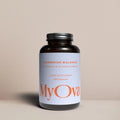
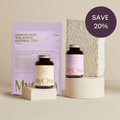
Zinc, myo-inositol, methylfolate and B6, plus vitamin D3 and iron, in one daily multivitamin for women.
Frequently Asked Questions About PMOS and Diet
What is PMOS (PCOS)?
PMOS, polyendocrine metabolic ovarian syndrome, is the new name for the condition previously known as PCOS. The name changed in May 2026 following a global consensus process published in The Lancet, backed by more than 50 international medical bodies [Teede et al., 2026]. The condition itself hasn't changed, only the name.
What is the best diet for PMOS (PCOS)?
There's no single universal PMOS (PCOS) diet. The most evidence-informed approaches focus on stabilising blood sugar and reducing insulin resistance, typically through low-glycaemic carbohydrates, adequate protein, healthy fats, and anti-inflammatory foods. The right approach depends on your individual symptom drivers.
Can diet alone manage PMOS (PCOS)?
Diet can meaningfully reduce PMOS (PCOS) symptoms and, for some women, support more regular ovulation. But PMOS (PCOS) is a complex, polyendocrine condition, and most women see the best results from a combined approach: dietary changes, targeted supplementation, stress management, and medical support where needed.
Are low-carb diets good for PMOS (PCOS)?
Low-carbohydrate and low-glycaemic approaches have reasonable evidence behind them for improving insulin sensitivity in PMOS (PCOS). They're not right for everyone, though, particularly women under high stress or with a history of disordered eating, since cutting carbohydrates too low can sometimes disrupt hormonal signalling. A moderate, balanced approach is often more sustainable.
Is fasting safe for women with PMOS (PCOS)?
Time-restricted eating is an active area of research for insulin sensitivity in PMOS (PCOS), though the evidence specific to the condition is still developing. Aggressive fasting protocols can raise stress hormones and disrupt cycle regularity in some women, so it's worth starting gradually and speaking with your GP or a registered dietitian first, particularly if you have fertility concerns or a history of disordered eating.
What supplements help with PMOS (PCOS) alongside diet?
Myo-inositol has one of the stronger evidence bases in PMOS (PCOS) research, with a systematic review of trials linking supplementation to improved insulin sensitivity, ovulation, and cycle regularity [Unfer et al., 2016]. Chromium, vitamin D, magnesium, and bioavailable folate are also commonly studied. Myoplus combines several of these in one daily supplement.
The Bottom Line
PMOS (PCOS) has a new name, and with it, wider recognition that this is a whole-body hormonal condition, not just a reproductive one.
The name change has been a long time coming. Your body is trying to tell you something, and it has been for a while. The question is whether the tools and information you have access to are good enough to help you hear it clearly.
These five cookbooks each offer something genuinely useful. They were written by people who understand the complexity of PMOS (PCOS), respect your intelligence, and want to give you practical tools rather than empty promises.
Start with one. Use it consistently. Pair it with evidence-informed supplementation where it makes sense. Talk to your healthcare provider about what else might support your individual picture.
Your diagnosis is a starting point, not a verdict. Eating well for your hormones is one of the most meaningful places to begin.
Want more like this?
Join the MyOva newsletter for new guides on hormones, cycles and supplements, written in plain English and checked against the research.
Join the newsletter →Related Reading
- What Is PMOS (PCOS)? A Complete Guide
- The Best Supplements for PMOS (PCOS): What the Evidence Actually Says
- 7-Day PMOS (PCOS) Diet Plan: Breakfast, Lunch, and Dinner Ideas
- Inflammatory PMOS (PCOS): How to Deal with a Flare-Up
References
- Teede HJ, et al. Redefining polycystic ovary syndrome as polyendocrine metabolic ovarian syndrome (PMOS): a global consensus statement. Lancet. 2026. doi:10.1016/S0140-6736(26)00717-8
- Diamanti-Kandarakis E, Dunaif A. Insulin resistance and the polycystic ovary syndrome revisited: an update on mechanisms and implications. Endocr Rev. 2012;33(6):981-1030. doi:10.1210/er.2011-1034
- Marsh KA, Steinbeck KS, Atkinson FS, Petocz P, Brand-Miller JC. Effect of a low glycemic index compared with a conventional healthy diet on polycystic ovary syndrome. Am J Clin Nutr. 2010;92(1):83-92. doi:10.3945/ajcn.2010.29261
- Gannon MC, Nuttall FQ. Amino acid ingestion and glucose metabolism: a review. IUBMB Life. 2010;62(9):660-668. doi:10.1002/iub.375
- Unfer V, Nestler JE, Kamenov ZA, Prapas N, Facchinetti F. Effects of inositol(s) in women with PCOS: a systematic review of randomized controlled trials. Int J Endocrinol. 2016;2016:1849162. doi:10.1155/2016/1849162
This blog post contains affiliate links for the books we recommend. We may receive a small commission if you purchase after clicking one of these links, at no extra cost to you. We only recommend resources we genuinely believe in.
The information in this article is for educational purposes only and does not constitute medical advice. Always consult a qualified healthcare professional before making significant changes to your diet or supplement routine.

Leila Martyn
Leila is the founder of MyOva, a women's wellness brand specialising in natural hormonal health and PMOS (PCOS) support. Drawing on lived experience and scientific research, Leila shares trusted, evidence-based guidance to help women understand their hormones, support cycle balance, and feel informed in their health journey.
Discover your perfect product in under a minute!
References