


















Male Fertility Supplements: What the Research Says
You're not imagining it. When a couple has trouble conceiving, the advice, the products and the blame tend to land on her. He gets told to cut back on drinking and not much else. This is what I wish someone had told me years ago: male factors are involved in a large share of fertility problems, and he deserves clear, honest information too.
We also owe you a correction. An earlier version of this guide said male fertility supplements support sperm quality and motility, and that most men would notice changes within weeks. The research since then, including two large placebo-controlled trials, hasn't backed that up. We sell a supplement for men, so we'd rather tell you what the evidence says than let an old claim stand.
Here's the short version. Large trials of antioxidant and zinc supplements in men have not shown better live birth or pregnancy rates, and NICE does not recommend them. Some small studies are more hopeful, and a few lifestyle factors have consistent links to semen quality. If you still want to take a supplement, there's a way to choose one sensibly, covered below.
In this guide we cover how common male factor infertility is, what a semen analysis measures, how long sperm take to develop, what the trials found, what the research says about each common ingredient, which lifestyle factors matter, safety limits, when to see a GP, and how to choose a product.

In this guide:
- How common is male factor infertility?
- What does a semen analysis measure?
- How long does it take to make sperm?
- Do male fertility supplements work?
- What does the research say about each ingredient?
- Which lifestyle factors affect sperm?
- Can male fertility supplements do harm?
- When should he see a GP?
- How do you choose a supplement?
- Frequently asked questions
New to MyOva? Join our mailing list for straight-talking hormone guides in your inbox. Trying to conceive? Start with ovulation symptoms, then read how to get pregnant.
How Common Is Male Factor Infertility?
In short: About 1 in 7 couples has trouble conceiving. Male factors are involved in many cases, but no one has a precise, current figure.
The NHS says around 1 in 7 couples may have difficulty conceiving, and that in about 1 in 4 cases no cause is found [1, 2]. The World Health Organization's first global infertility guideline, published in November 2025, puts it at about 1 in 6 people of reproductive age at some point in their lives [3].
What about the share caused by men? A widely cited review puts a purely male factor at roughly 20% to 30% of infertile couples, with a combination of male and female factors in another 20% to 30% [4]. That's where the 'around half of cases involve male factors' line comes from, and it's a fair summary. But those are older, secondary estimates, and the NHS doesn't give a male share at all. So treat 'half' as a rough guide, not a statistic.
The practical point is that it's a couple's issue. Both partners should be assessed, and neither should be blamed.
The hormone education you were never given
Clear, evidence-led emails from our founder Leila, plus 20% off your first order.*
Count me in →*New customers only. Can’t be combined with any other offer or bundles on our website.*New customers only. Not valid with other offers or bundles.
What Does a Semen Analysis Measure, and What Do the Results Mean?
In short: A semen test counts sperm and checks how they move and look. Results below WHO limits aren't a diagnosis, and results above them aren't a guarantee.
Male fertility isn't one number. A semen analysis measures volume, concentration, total sperm number, motility (how well sperm move), vitality and morphology (shape). The World Health Organization publishes lower reference limits for each [5].
| Measure | WHO lower reference limit | What it tells you |
|---|---|---|
| Semen volume | 1.4 mL | How much fluid is in the sample |
| Sperm concentration | 16 million per mL | Sperm per millilitre |
| Total sperm number | 39 million per ejaculate | Sperm in the whole sample |
| Total motility | 42% | Share of sperm that move |
| Progressive motility | 30% | Share that swim forward |
| Vitality | 54% | Share that are alive |
| Normal forms | 4% | Share with a typical shape |
Here's the catch. These limits are the 5th centile of results from men whose partners conceived within a year. WHO itself says they do not mark a line between fertile and subfertile men [5, 6], and a 2022 critique questioned the statistics behind the pooled values [7]. A result under a limit isn't a diagnosis, and a result above it isn't a guarantee.
NICE's 2026 guideline says an abnormal result should be repeated, ideally about 3 months later, sooner if there are no sperm or only a few. After two or more abnormal results, the next steps are a scrotal and testicular examination and possibly testosterone and gonadotrophin blood tests. WHO advises 2 to 7 days of abstinence before a sample [8, 5].
You'll see 'DNA integrity' listed as a fertility measure in many supplement guides, including our old one. NICE advises against routine testing for sperm DNA fragmentation, so we've dropped it from the list [8].
How Long Does It Take to Make Sperm?
In short: Sperm take about 64 days to develop, so changes made now show up in a semen test roughly three months later, not within weeks.
A classic 1963 estimate put the whole process at about 64 days [9]. A later study that tracked labelled sperm in 11 men found they first appeared at an average of 64 days, with a range of 42 to 76 days [10]. So 'two to three months' is a fair rule of thumb, and it's why NICE suggests repeating a semen test about 3 months after an abnormal one [8].
Our earlier guide said men would notice energy changes within 4 to 6 weeks and fertility markers after 2 to 3 months. We couldn't find a source for the 4 to 6 week claim, so it's gone. The 2 to 3 month point stands, with one extra consequence: a study that lasts less than three months can't tell you much about sperm.
Do Male Fertility Supplements Work?
In short: Large trials found no benefit for live birth or pregnancy, and NICE doesn't recommend supplements for men. Smaller studies have been more hopeful.
The honest answer is: not reliably. A 2022 Cochrane review pooled 90 trials with 10,303 subfertile men taking antioxidants. Live birth was higher with antioxidants (odds ratio 1.43), but the certainty was low or lower, and the effect disappeared when weaker studies were excluded. Clinical pregnancy was also higher (odds ratio 1.89), and stomach upset was more common (odds ratio 2.70). The authors called the evidence inconclusive [11].
Since then, bigger and better-designed trials have landed, and they lean the other way.
| Trial | What was tested | What happened |
|---|---|---|
| MOXI (2020, USA) | Vitamin C, vitamin E, selenium, L-carnitine, zinc, folic acid and lycopene, 3 to 6 months | No benefit on sperm concentration, motility or DNA fragmentation. Live birth 15% against 24% with placebo, though the trial stopped early [12] |
| FAZST (2020, USA) | Zinc 30 mg plus folic acid 5 mg in 2,370 couples, 6 months | Live birth 34% against 35% with placebo. No change in semen quality. DNA fragmentation was slightly higher with the supplement [13] |
| SUMMER (2025, Netherlands) | A betaine, cystine and zinc supplement in 1,171 men, 6 months | Ongoing pregnancy 33.8% against 37.5% with placebo (not significant). In the 4 to 6 month window it was 15.5% against 21.5%, favouring placebo [14] |
MOXI used a mix that overlaps a lot with many male fertility formulas, including ours, so it's the most relevant comparison. It was small for a live birth outcome, so it can't prove harm, but it didn't find help either.
Guidelines agree. The European Association of Urology weakly recommends against routine antioxidants for idiopathic male infertility, and NICE's 2026 guideline makes no recommendation to offer vitamins or antioxidants to men to improve fertility. It specifically advises against supplements or antioxidants aimed at sperm DNA fragmentation [15, 8].
There's a more hopeful view too. A 2022 meta-analysis of 45 trials found better pregnancy rates and semen parameters with antioxidants, though not live birth [16]. A 2026 expert consensus statement supports testing for oxidative stress first and warns against indiscriminate or prolonged use [17]. That's expert opinion, not trial evidence, but it shows the field is still arguing.
What Does the Research Say About Each Common Ingredient?
In short: Most ingredients have only small, short trials, mainly measuring semen results rather than pregnancy. None is proven to improve fertility.
Many male fertility formulas combine a dozen or more ingredients. Here's what human research says about the most common ones. Mostly it's small trials that measure semen results rather than whether a couple conceives.
| Ingredient | What human studies show | Caveats |
|---|---|---|
| Zinc | FAZST: no benefit at 30 mg. An older trial of 211 men reported more normal sperm with zinc and folic acid [13, 18] | The newer, larger trial found no live birth benefit. NHS limit is 25 mg a day |
| Selenium | A network meta-analysis found it beat placebo on some sperm measures, but not on pregnancy [19] | Excess causes harm. NHS limit is 350 micrograms a day |
| CoQ10 | A meta-analysis of 8 trials in 877 men reported better count, motility and morphology [20]. A small before-and-after study used 300 mg a day [21] | High variation between trials. Not placebo-controlled in the small study |
| L-carnitine | Ranked best for motility (about 6.5 percentage points) and shape in the network meta-analysis, with no pregnancy benefit [19] | MOXI included 1,000 mg and found no benefit |
| NAC | One placebo-controlled trial of 120 men (600 mg, 3 months) found better volume, motility and oxidative markers, but no change in count or shape [22] | No pregnancy data |
| Lycopene | A 2025 meta-analysis of 4 studies in 151 men found higher concentration, but it vanished when one study was removed [23] | Small evidence base |
| L-arginine | Only small studies, for example 47 men taking it with pine bark extract [24] | Design and control group unclear |
| Myo-inositol | A small placebo-controlled trial reported better sperm parameters [25] | Limited to small trials in men |
| Cordyceps | We found no human trials in men | Nothing evidence-based to say |
A 2018 review of 28 supplement trials found that selenium, zinc, omega-3 and CoQ10 improved some semen measures and carnitines improved motility, but the authors urged caution because of small samples and variation, and none reported pregnancy outcomes [26].
What about the nutrition claims you're allowed to make? In Great Britain, zinc contributes to normal fertility and reproduction, and selenium contributes to normal spermatogenesis. Those statements describe what the nutrients do as part of normal diets. They don't say a supplement will improve a low sperm count. We found no authorised claims for CoQ10, L-carnitine, L-arginine, NAC, lycopene, myo-inositol or cordyceps.
Find your formula in 60 secondsAnswer a few quick questions and we’ll match you to the right support for where you are right now,. plusPlus 20% off your first order.Find my formula →
Which Lifestyle Factors Affect Sperm?
In short: Smoking, heavy drinking, higher weight, steroid use and heat are linked to poorer semen quality, but most evidence is observational.
Nearly all of this evidence is observational. It shows links, not proof that changing a habit restores fertility. Still, it's where the best guidance sits, and the changes also help general health.
| Factor | What studies show | Strength of evidence |
|---|---|---|
| Smoking | In infertile men, a review of 16 studies and 10,823 men found higher risk of a low sperm count (relative risk 1.29). The NHS says smoking can reduce semen quality [27, 2] | Consistent, observational |
| Alcohol | In 1,221 young Danish men, drinking over 40 units a week went with 33% lower sperm concentration than 1 to 5 units. A meta-analysis found lower volume and normal forms with alcohol, and suggested moderate drinking may not harm [28, 29] | Observational. Heavy drinking is the clear concern |
| Weight | In a meta-analysis of 13,077 men, obesity went with higher odds of low or absent sperm (odds ratio 1.28) [30] | Observational, modest |
| Heat | Using a laptop on the lap raised scrotal temperature by about 2.6 to 2.8 degrees in 29 volunteers. The NHS notes it is uncertain whether loose underwear improves fertility [31, 2] | Plausible, semen effect not proven |
| Steroids and testosterone products | Both suppress sperm production, and recovery after stopping varies. NICE advises against androgens to treat semen abnormalities [32, 8] | Well established |
| Cannabis | In 9 studies, 44.9% of users had impaired semen parameters against 24.5% of non-users [33] | Observational, mixed |
| Sleep and stress | Poor sleep scores went with 29% lower concentration in 953 young men, and the highest stress with 38% lower in 1,215 men [34, 35] | Single cross-sectional studies in young men |
| Diet | Healthier dietary patterns were linked to better sperm quality across 35 observational studies [36] | Observational, weak |
| Age | A review of 90 studies found older age went with lower volume, motility and normal forms, but not lower concentration [37] | Consistent, observational |
On alcohol, NICE says moderate intake within weekly limits, spread over several days, is unlikely to affect semen quality, and the NHS advises keeping to 14 units a week spread over three or more days [8, 38]. This isn't a blame list. Most men can't change their age, and nobody sleeps perfectly. Pick the ones you can change and leave the rest.
Can Male Fertility Supplements Do Harm?
In short: More isn't better. High doses may backfire, so stay within NHS limits and count everything he takes, including multivitamins and partner supplements.
It's easy to assume that vitamins are harmless. The trial data say otherwise. In FAZST, men taking zinc and folic acid had slightly higher DNA fragmentation (29.7% against 27.2%) and more stomach symptoms [13]. In SUMMER, the supplement group did worse in the 4 to 6 month window [14]. The Cochrane review found stomach upset more common with antioxidants [11].
Vitamin E has a bigger warning attached. In SELECT, 35,533 healthy older men took vitamin E 400 IU a day or placebo, and the vitamin E group had a higher risk of prostate cancer (hazard ratio 1.17). That wasn't an infertility trial, but it's a reminder that antioxidants aren't automatically safe at high doses [39].
The NHS gives these limits for supplements, unless a doctor advises otherwise: zinc 25 mg a day, selenium 350 micrograms, vitamin B6 10 mg, vitamin E 540 mg, and vitamin C under 1,000 mg [40, 41, 42, 43]. Add up everything he takes. A male formula plus a multivitamin plus a sports product can double up on zinc and selenium without anyone noticing.
For L-arginine, NAC and cordyceps, we couldn't find a reliable source on cautions, so ask a pharmacist, especially if he takes any medicines. And be wary of anything marketed as a testosterone booster. NICE advises against treating semen problems with androgens, and steroid misuse suppresses sperm production [8, 32].

When Should He See a GP, and What Happens Next?
In short: See a GP after a year of trying, or sooner if she is 36 or over or there's a known issue. The first test for men is a semen analysis.
The NHS advises seeing a GP if you haven't conceived after a year of regular unprotected sex. Go sooner if the woman is 36 or over, or if either of you has had cancer treatment or might have a sexually transmitted infection [44, 8].
For men, the first step is a semen analysis and a urine test for chlamydia, and the GP may check the testicles for lumps or deformities [44]. If a result is abnormal it's repeated, usually about 3 months later. Further tests can include blood tests and a testicular ultrasound [38, 8].
What if something is found? NHS treatments include hormone injections called gonadotrophins, surgery for blockages, surgical sperm retrieval, IVF or ICSI, and donor sperm [45, 38]. A repeat test at 3 months also shows whether lifestyle changes are making a difference, which beats guessing from how he feels.
It can be a lonely process for men. Fertility Network UK runs monthly men-only support groups through its HIMfertility programme [46]. Talking to someone who's been through it helps.
How Do You Choose a Male Fertility Supplement, If You Want One?
In short: Check the label for amounts, stay within NHS limits, ignore bold claims, and judge results by a semen test at about three months, not by how he feels.
If you've read the above and still want to try one, that's a reasonable choice, as long as expectations are realistic. Here's how to pick sensibly:
- Look for amounts, not just names. A label that lists ingredients without doses can't be checked against the limits above.
- Stay within NHS limits. Add up zinc, selenium, B6 and vitamin E across everything he takes.
- Be wary of big promises. Anything claiming to boost count, motility or testosterone is going beyond the evidence.
- Tell the GP or pharmacist. Include supplements, medicines and any steroid or testosterone use.
- Judge it at about 3 months. Use a repeat semen analysis, which matches the sperm cycle.
- Don't delay medical help. A supplement is not a substitute for assessment.
Our own option is below. We've kept the wording to what's permitted, and we want to be upfront about it.

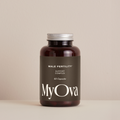
A daily food supplement with zinc, which contributes to normal fertility and reproduction, and selenium, which contributes to normal spermatogenesis, plus vitamins C, E and D3, B vitamins, CoQ10, L-carnitine, NAC and more. Two capsules a day.
Read this first. Men's Fertility Support is a food supplement. It isn't a treatment for infertility, and the trials above found no live birth benefit for formulas of this type, including MOXI, which used a similar mix of ingredients. It contains zinc and selenium, so check the label against the NHS limits before adding anything else. Show it to your GP or pharmacist if he takes medicines or has a diagnosed condition.
The hormone education you were never given
Clear, evidence-led emails from our founder Leila, plus 20% off your first order.*
Count me in →*New customers only. Can’t be combined with any other offer or bundles on our website.*New customers only. Not valid with other offers or bundles.
Frequently Asked Questions
What is the best male fertility supplement?
No supplement has been shown to reliably improve male fertility, so there isn't a proven best one. The strongest trials found no benefit for pregnancy or live birth, and NICE doesn't recommend supplements for men. Focus on a GP assessment and the lifestyle factors you can change first [11, 12, 8].
Do male fertility supplements improve sperm quality?
Some small trials report better motility or count for certain ingredients, but the larger trials found no benefit on semen quality or live birth. Results are mixed, and short trials can't judge sperm that take about 3 months to develop [19, 12, 10].
How long should a man take fertility supplements?
If he chooses to take one, about 3 months is the minimum to judge a semen result, because sperm take about 64 days to develop. A repeat semen analysis after that shows whether it made a difference. There's no proven benefit from taking them longer [10, 8].
Can men take fertility supplements alongside other vitamins?
Often yes, but add up the doses. The NHS limits for supplements are zinc 25 mg, selenium 350 micrograms, vitamin B6 10 mg and vitamin E 540 mg a day. Ask a pharmacist if he takes medicines [40, 41, 42].
Can lifestyle changes improve sperm?
Stopping smoking, cutting heavy drinking, reaching a lower weight and avoiding steroids are linked to better semen quality, but most evidence is observational. Sperm take about two to three months to renew, so expect any change to show after that [27, 28, 30, 10].
The Bottom Line
Male factors matter, and he deserves the same attention as she does. But the research is clear on one thing: the large trials of antioxidant and zinc supplements haven't shown more babies, and NICE doesn't recommend them. What does help is assessment: a semen analysis, a GP conversation, and changing the things you can, like smoking, heavy drinking and heat. If you add a supplement, keep the doses within NHS limits and judge it by a repeat test at about three months.
Your body is trying to tell you something, and so is his. Hormonal literacy isn't complicated, it's just rarely taught. It's not a magic fix, and we'd rather say that than sell you one.
Related Reading
- Which MyOva Supplements Should I Be Taking for Improved Fertility With PMOS (PCOS)?
- How to Improve Fertility With PMOS (PCOS): 6 Habits
- Preparing for IVF With PMOS (PCOS): What the Research Says
- The Role of Myo-Inositol in Fertility Treatments: What the Research Actually Shows
- CoQ10 for Fertility: Benefits and What the Research Shows
- Selenium Benefits: Thyroid, Hair, Nails and Hormones
This article is for educational purposes only and does not constitute medical advice. Guidance details are accurate to the sources cited at the time of writing and may change. MyOva products are food supplements, not medicines, and are not intended to diagnose, treat, cure or prevent any disease. Food supplements should not replace a varied diet. If you have concerns about fertility, speak to your GP before taking any supplement.
References
- NHS. Infertility. https://www.nhs.uk/conditions/infertility/
- NHS. Infertility: causes. https://www.nhs.uk/conditions/infertility/causes/
- World Health Organization. Guideline for the prevention, diagnosis and treatment of infertility: summary of recommendations. 28 November 2025. https://www.who.int/publications/i/item/B09599
- Agarwal A, Mulgund A, Hamada A, Chyatte MR. A unique view on male infertility around the globe. Reprod Biol Endocrinol. 2015;13:37. doi:10.1186/s12958-015-0032-1
- World Health Organization. WHO laboratory manual for the examination and processing of human semen. 6th ed. Geneva: WHO; 2021. https://who.int/publications/i/item/9789240030787
- Campbell MJ, Lotti F, Baldi E, et al. Distribution of semen examination results 2020: a follow up of data collated for the WHO semen analysis manual 2010. Andrology. 2021;9(3):817-822. doi:10.1111/andr.12983
- Paffoni A, Somigliana E, Boeri L, Viganò P. The statistical foundation of the reference population for semen analysis included in the sixth edition of the WHO manual: a critical reappraisal of the evidence. Hum Reprod. 2022;37(10):2237-2245. doi:10.1093/humrep/deac161
- National Institute for Health and Care Excellence. Fertility problems: assessment and treatment (NG257). Published 31 March 2026. https://www.nice.org.uk/guidance/ng257
- Heller CG, Clermont Y. Spermatogenesis in man: an estimate of its duration. Science. 1963;140:184-186
- Misell LM, et al. A stable isotope-mass spectrometric method for measuring human spermatogenesis kinetics in vivo. J Urol. 2006 (authors, volume and pages not confirmed here)
- de Ligny W, Smits RM, Mackenzie-Proctor R, Jordan V, Fleischer K, de Bruin JP, Showell MG. Antioxidants for male subfertility. Cochrane Database Syst Rev. 2022;(5):CD007411. doi:10.1002/14651858.CD007411.pub5
- Steiner AZ, Hansen KR, Barnhart KT, et al. The effect of antioxidants on male factor infertility: the Males, Antioxidants, and Infertility (MOXI) randomized clinical trial. Fertil Steril. 2020;113(3):552-560.e3. doi:10.1016/j.fertnstert.2019.11.008
- Schisterman EF, Sjaarda LA, Clemons T, et al. Effect of folic acid and zinc supplementation in men on semen quality and live birth among couples undergoing infertility treatment: a randomized clinical trial. JAMA. 2020;323(1):35-48. doi:10.1001/jama.2019.18714
- de Ligny WR, de Bruin JP, Smits RM, et al. Antioxidant treatment and the chance to conceive in men seeking fertility care: the SUMMER randomized clinical trial. JAMA Netw Open. 2025;8(9):e2532405. doi:10.1001/jamanetworkopen.2025.32405
- European Association of Urology. Sexual and Reproductive Health guidelines: male infertility. https://uroweb.org/guidelines/sexual-and-reproductive-health
- Agarwal A, Cannarella R, Saleh R, et al. Impact of antioxidant therapy on natural pregnancy outcomes and semen parameters in infertile men: a systematic review and meta-analysis of randomized controlled trials. World J Mens Health. 2022 (volume and pages not confirmed here)
- Agarwal A, Mostafa T, Al Hashimi M, et al. Global Andrology Forum clinical guidelines on antioxidant use in the treatment of male infertility. World J Mens Health. 2026;44:e3. doi:10.5534/wjmh.250290
- Wong WY, Merkus HMWM, Thomas CMG, Menkveld R, Zielhuis GA, Steegers-Theunissen RPM. Effects of folic acid and zinc sulfate on male factor subfertility: a double-blind, randomized, placebo-controlled trial. Fertil Steril. 2002;77(3) (pages not confirmed here)
- Li K, Yang X, Wu T. The effect of antioxidants on sperm quality parameters and pregnancy rates for idiopathic male infertility: a network meta-analysis of randomized controlled trials. Front Endocrinol. 2022;13. doi:10.3389/fendo.2022.810242
- Akhigbe TM, Fidelis FB, Adekunle AO, et al. Does coenzyme Q10 improve semen quality and circulating testosterone level? A systematic review and meta-analysis of randomized controlled trials. Front Pharmacol. 2024;15:1497930. doi:10.3389/fphar.2024.1497930
- Alahmar AT. Coenzyme Q10 improves sperm motility and antioxidant status in infertile men with idiopathic oligoasthenospermia. Clin Exp Reprod Med. 2022;49(4):277-284. doi:10.5653/cerm.2022.05463
- Ciftci H, Verit A, Savas M, Yeni E, Erel O. Effects of N-acetylcysteine on semen parameters and oxidative/antioxidant status. Urology. 2009;74(1):73-76. doi:10.1016/j.urology.2009.02.034
- Viña I, Viña JR. Association of lycopene and male reproductive health: systematic review and meta-analysis. Int J Mol Sci. 2025;26(15):7224. doi:10.3390/ijms26157224
- Kobori Y, Suzuki K, Iwahata T, et al. Arch Ital Urol Androl. 2015;87(3):190-193. doi:10.4081/aiua.2015.3.190 (L-arginine with pine bark extract in men with oligoasthenozoospermia; title not confirmed here)
- Calogero AE, Gullo G, La Vignera S, Condorelli RA, Vaiarelli A. Myoinositol improves sperm parameters and serum reproductive hormones in patients with idiopathic infertility: a prospective double-blind randomized placebo-controlled study. Andrology. 2015. doi:10.1111/andr.12025 (volume and pages not confirmed here)
- Salas-Huetos A, Rosique-Esteban N, Becerra-Tomás N, Vizmanos B, Bulló M, Salas-Salvadó J. The effect of nutrients and dietary supplements on sperm quality parameters: a systematic review and meta-analysis of randomized clinical trials. Adv Nutr. 2018;9(6):833-848. doi:10.1093/advances/nmy057
- Bundhun PK, Janoo G, Bhurtu A, et al. Tobacco smoking and semen quality in infertile males: a systematic review and meta-analysis. BMC Public Health. 2019 (volume and pages not confirmed here)
- Jensen TK, Gottschau M, Madsen JOB, et al. Habitual alcohol consumption associated with reduced semen quality and changes in reproductive hormones; a cross-sectional study among 1221 young Danish men. BMJ Open. 2014;4(9):e005462
- Ricci E, Beitawi SA, Cipriani S, et al. Semen quality and alcohol intake: a systematic review and meta-analysis. Reprod Biomed Online. 2017;34(1):38-47. doi:10.1016/j.rbmo.2016.09.012
- Sermondade N, Faure C, Fezeu L, et al. BMI in relation to sperm count: an updated systematic review and collaborative meta-analysis. Hum Reprod Update. 2013;19(3):221-231
- Sheynkin Y, Jung M, Yoo P, Schulsinger D, Komaroff E. Increase in scrotal temperature in laptop computer users. Hum Reprod. 2005;20(2):452-455. doi:10.1093/humrep/deh616
- Desai A, Yassin M, Cayetano A, Tharakan T, Jayasena CN. Understanding and managing the suppression of spermatogenesis caused by testosterone replacement therapy (TRT) and anabolic-androgenic steroids (AAS). Ther Adv Urol. 2022;14:17562872221105017. doi:10.1177/17562872221105017
- Belladelli F, Del Giudice F, Kasman A, et al. The association between cannabis use and testicular function in men: a systematic review and meta-analysis. Andrology. 2021;9(2):503-510. doi:10.1111/andr.12953
- Jensen TK, Andersson AM, Skakkebæk NE, et al. Association of sleep disturbances with reduced semen quality: a cross-sectional study among 953 healthy young Danish men. Am J Epidemiol. 2013;177(10):1027-1037. doi:10.1093/aje/kws420
- Nordkap L, Jensen TK, Hansen ÅM, et al. Psychological stress and testicular function: a cross-sectional study of 1,215 Danish men. Fertil Steril. 2016;105(1):174-187.e2. doi:10.1016/j.fertnstert.2015.09.016
- Salas-Huetos A, et al. Dietary patterns and semen quality: systematic review of observational studies (35 studies). Hum Reprod Update. 2017 (exact title, volume and DOI not confirmed here)
- Johnson SL, Dunleavy J, Gemmell NJ, Nakagawa S. Consistent age-dependent declines in human semen quality: a systematic review and meta-analysis. Ageing Res Rev. 2015;19:22-33. doi:10.1016/j.arr.2014.10.007
- NHS. Low sperm count. https://www.nhs.uk/conditions/low-sperm-count/
- Klein EA, Thompson IM, Tangen CM, et al. Vitamin E and the risk of prostate cancer: the Selenium and Vitamin E Cancer Prevention Trial (SELECT). JAMA. 2011;306(14):1549-1556. doi:10.1001/jama.2011.1437
- NHS. Other vitamins and minerals (zinc and selenium). https://www.nhs.uk/conditions/vitamins-and-minerals/others/
- NHS. Vitamin B: B6. https://www.nhs.uk/conditions/vitamins-and-minerals/vitamin-b/
- NHS. Vitamin E. https://www.nhs.uk/conditions/vitamins-and-minerals/vitamin-e/
- NHS. Vitamin C. https://www.nhs.uk/conditions/vitamins-and-minerals/vitamin-c/
- NHS. Infertility: diagnosis. https://www.nhs.uk/conditions/infertility/diagnosis/
- NHS. Infertility: treatment. https://www.nhs.uk/conditions/infertility/treatment/
- Fertility Network UK. HIMfertility. https://fertilitynetworkuk.org/himfertility/

Leila Martyn
Leila is the founder of MyOva, a UK-based hormonal health brand for women with PMOS (PCOS), endometriosis, perimenopause, PMDD and fertility challenges. Drawing on lived experience and scientific research, she shares evidence-based guidance to help women feel informed about their hormones and cycles.