















Chamomile for PMS and Period Pain: What the Research Actually Shows
By Leila Martyn, Founder of MyOva
Chamomile has a small but real body of research on periods. In a handful of trials, mostly in Iranian university students, women who took chamomile daily from about a week before their period reported less period pain [1][2] and milder PMS symptoms [3][4] than women given nothing or a placebo. That's more than most "calming" herbs can say. But the trials are small, short and done by a small number of research groups, and none of them proves chamomile will work for you. It's a reasonable, low-risk thing to try. It's not a replacement for pain relief that works, or for a GP appointment if your pain is getting worse.
Below is what the studies actually tested, the doses and timing they used, what we know (and don't) about chamomile and sleep, who should skip it, and where it sits in the MyOva range.
Dealing with period pain right now? Start with our guide to period pain relief: what actually works. If it's the mood side that hits hardest, read PMDD vs severe PMS, and if your sleep falls apart the week before, read why you can't sleep before your period.
New to MyOva? Join our mailing list for straight-talking hormone guides in your inbox. Want to understand your cycle? Start with the luteal phase, then read PMDD vs severe PMS.
In this guide
- What is chamomile, and what's in it?
- Does chamomile help with period pain?
- Can chamomile help with PMS symptoms?
- How might chamomile work?
- Tea or capsule: which form did the studies use?
- How much chamomile, and when?
- Can chamomile help you sleep before your period?
- Is chamomile safe, and who should avoid it?
- When should period pain send you to your GP?
- FAQ
What is chamomile, and what's in it?
In short: A daisy-family flower, usually German chamomile, used as tea or extract. Its best-known plant compound is a flavonoid called apigenin.
When people say "chamomile" they usually mean German chamomile (Matricaria chamomilla, also written Matricaria recutita). It's the small, daisy-like flower dried for tea, and it's the plant used in almost all of the period research. Roman chamomile (Chamaemelum nobile) is a different plant, so don't assume the two are interchangeable.
Chamomile flowers contain a mix of plant compounds, including flavonoids such as apigenin and essential oils such as bisabolol and chamazulene [6]. Apigenin gets most of the attention, and we'll come back to why.
Chamomile is also part of the daisy family (Asteraceae), alongside ragweed, marigolds and chrysanthemums. That matters for allergies, which we cover in the safety section.
One thing worth knowing up front: in the UK, chamomile has no authorised health claims [12]. That's why you'll see us describe what studies found, rather than tell you what chamomile "does".
The hormone education you were never given
Clear, evidence-led emails from our founder Leila, plus 20% off your first order.*
Count me in →*New customers only. Can’t be combined with any other offer or bundles on our website.*New customers only. Not valid with other offers or bundles.
Does chamomile help with period pain?
In short: Several small Iranian trials found less period pain with chamomile than without. Promising, but the studies are small and varied.
The study you'll see quoted most is Jenabi and Ebrahimzadeh, published in 2010 [1]. It followed 80 female students at Toyserkan Azad University in western Iran with primary dysmenorrhoea (that's period pain without an underlying condition like endometriosis). Half drank two cups of chamomile tea a day, from one week before their period through the first five days of bleeding. The other half drank nothing extra. They did this for three cycles.
By the end of the first month, the chamomile group reported significantly less period pain, distress and anxiety than the control group, and the difference held at three months [1]. The authors called chamomile tea "an effective therapy" for primary dysmenorrhoea.
Before you stock up, a few big caveats:
- It was described as "semi-experimental", not a blinded placebo-controlled trial. The control group knew they weren't drinking tea, and expectation alone can lower pain scores.
- The published summary doesn't report the actual pain scores, so we can't tell how big the difference was.
- It was one university, one country, 80 people.
A 2021 systematic review pulled together seven clinical trials (1,033 women in total, mostly Iranian students) that tested chamomile for period pain, heavy bleeding or both [2]. Most used capsules, often around 250 mg three times a day, and several compared chamomile with the painkiller mefenamic acid. The reviewers concluded chamomile "can be considered as an effective treatment for primary dysmenorrhea", but they also couldn't combine the results statistically because the doses, forms and timing were too different. Three of the seven trials mixed chamomile with other herbs, so chamomile's own effect wasn't clear in those, and several had unclear methods. The reviewers asked for better trials.
So here's where I land. You're not imagining it if a warm cup of chamomile feels like it helps. There is some trial evidence behind that. But it's early-stage evidence, and it hasn't been tested in large, independent, well-blinded trials, or in women outside a narrow group of students.
Can chamomile help with PMS symptoms?
In short: One placebo-controlled trial of 118 students found milder PMS with chamomile powder. A review of 8 trials agreed, but called the evidence thin.
The best-designed PMS trial is Najafi Mollabashi and colleagues, published in 2018 [3]. It recruited 118 students at Guilan University of Medical Sciences with moderate to severe PMS and randomly split them into two groups. One took 250 mg of chamomile powder three times a day (750 mg a day). The other took an identical-looking placebo. Both started seven days before their period and stopped when bleeding began, for one cycle. Neither the women nor the researchers knew who had what, which is the design you want.
They measured symptoms with the Premenstrual Symptoms Screening Tool, a standard PMS questionnaire. Both groups improved (that's normal in PMS research, because simply tracking your symptoms and being in a study helps a bit). But the chamomile group improved more than the placebo group on physical symptoms, psychological symptoms and the total score [3].
A 2019 systematic review found eight trials of chamomile for PMS, using tea, capsules, drops and oil, compared with placebo, mefenamic acid or nothing [4]. The authors were positive overall, but they were also clear that "the amount of evidence about the effect of Chamomile is very little", and that the mix of forms and doses made firm conclusions difficult.

If your premenstrual mood shifts feel bigger than "PMS", please don't settle for a cup of tea. Severe mood symptoms that lift once your period starts can be PMDD, which is a recognised condition with effective treatments. Our guides to PMDD symptoms and PMDD support walk you through what to track and what to ask your GP.
If you're struggling right now: if you're having thoughts of self-harm or suicide, you don't have to wait for it to pass. Call Samaritans free on 116 123 (24 hours), call NHS 111, or call 999 if you're in immediate danger.
How might chamomile work?
In short: Lab research found apigenin binds to calming receptors in the brain, and chamomile may relax muscle. That's a theory, not proof.
Back to apigenin. In a 1995 study, Argentinian researchers showed that apigenin, taken from chamomile flowers, binds to the same receptor site in the brain that benzodiazepine medicines act on, although far more weakly, and had a calming effect in mice [5]. Researchers have also proposed that chamomile relaxes smooth muscle (the type of muscle in the womb) and has anti-inflammatory effects in lab studies [6].
That gives scientists a reason to test chamomile for period pain and premenstrual tension. It doesn't tell you it works in your body. Mouse studies and test-tube results often don't carry over to people, and the doses don't line up neatly with a cup of tea. Hormonal literacy isn't complicated, it's just rarely taught, and a big part of it is knowing the difference between "here's a plausible mechanism" and "here's what happened in women".
Chamomile research at a glance
| What was studied | Form and dose | Design | What it found |
|---|---|---|---|
| Period pain [1] | 2 cups of tea a day, 1 week before period to day 5, 3 cycles | Semi-experimental, 80 students | Less pain, distress and anxiety than controls |
| Period pain and bleeding [2] | Mostly capsules, often 250 mg 3 times a day | Review of 7 trials, 1,033 women | Positive, but trials too varied to combine |
| PMS [3] | 250 mg powder 3 times a day, 7 days before period | Double-blind, placebo-controlled, 118 students | Bigger drop in PMS scores than placebo |
| PMS [4] | Tea, capsules, drops, oil | Review of 8 trials | Positive, but "very little" evidence overall |
| Sleep quality and anxiety [7] | Various | Review of 12 trials | Better sleep quality; no clear effect on insomnia |
Tea or capsule: which form did the studies use?
In short: Both. The pain study used tea; the PMS trial used capsules. No trial has compared the two head to head, so neither is proven better.
This is one of the few herbs where both forms have been tested. The period pain study used two cups of brewed tea a day [1]. The placebo-controlled PMS trial used capsules of chamomile powder [3]. Most of the trials in the dysmenorrhoea review used capsules too [2]. Nobody has tested tea against capsules for periods, so there's no evidence that one beats the other.

In practice, they suit different habits:
- Tea is cheap, caffeine-free and easy to build into a routine. But the strength of a cup depends on the flowers, how much you use and how long you steep it. A sad, dusty teabag dunked for 30 seconds isn't the same as a properly brewed cup of loose flowers.
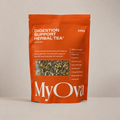
- Extracts are concentrated. A "5:1" extract means roughly five parts of dried flower went into one part of extract, so the amount in each dose is more consistent. The flip side is that you can't always match a product's dose to what was used in trials.
This is what I wish someone had told me years ago: when you read "chamomile" on a label, look for the form, the amount and the extract ratio. Without those three, you can't compare it with anything.

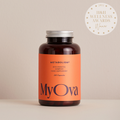
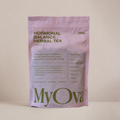
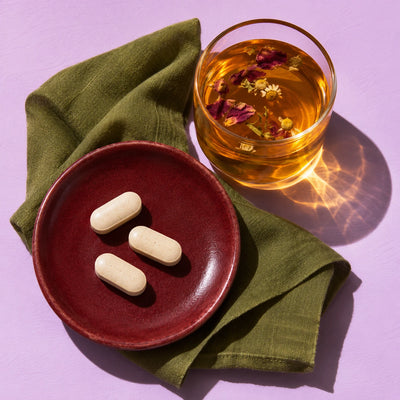
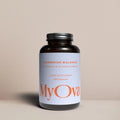
Vitamin B6 contributes to the regulation of hormonal activity and to normal psychological function. Also contains chamomile flower extract (5:1), ashwagandha, rhodiola, L-theanine, turmeric, broccoli extract and 5-HTP. Contains 5-HTP and ashwagandha: speak to your GP first if you take antidepressants or hormonal medication, or if you're pregnant or breastfeeding.
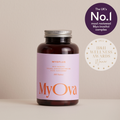
Chamomile is one ingredient in Cycle Support, not the headline act, and the amount isn't designed to match the trials. We give the exact figures in the next section.
Find your formula in 60 secondsAnswer a few quick questions and we’ll match you to the right support for where you are right now,. plusPlus 20% off your first order.Find my formula →
How much chamomile, and when?
In short: Trials used 2 cups of tea or about 750 mg of powder a day, starting a week before the period. Timing mattered as much as dose.
Here's what the main studies used:
- Period pain: two cups of chamomile tea a day, from one week before your period to day five of bleeding, for three cycles [1].
- PMS: 250 mg of chamomile powder three times a day (750 mg a day), from seven days before your period until bleeding started [3].
- Other period-pain trials: mostly 250 mg capsules every eight hours, with some using 400 mg every six hours, usually over two cycles [2].
Notice the pattern. None of these were "drink a cup when the cramps start" studies. They all started before the period and kept going daily. If you want to try chamomile in a way that looks like the research, that's the approach to copy. One cup on day two, when you're already curled up on the bathroom floor, isn't what was tested.
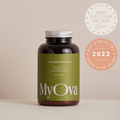
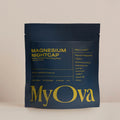
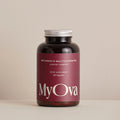
To be clear about our own products: Cycle Support contains 50 mg of a 5:1 chamomile flower extract per capsule, so 100 mg in the two-capsule daily serving. Magnesium Nightcap contains a 20:1 chamomile extract, equivalent to 300 mg of flower per serving. Neither is designed to copy the trial doses above, because extracts and raw powder aren't directly comparable, and neither is sold as a treatment for period pain or PMS. Chamomile is one ingredient within a wider formula in both.
It's not a magic fix. But if you like the ritual of a cup of tea in your luteal phase, there's no harm in making it chamomile, as long as none of the safety points below apply to you.
Can chamomile help you sleep before your period?
In short: A review of 12 trials found better sleep quality with chamomile, but no clear effect on insomnia. It hasn't been tested before periods.
This is where the evidence gets mixed. A 2019 review and meta-analysis of 12 trials found that chamomile improved sleep quality scores compared with control groups [7]. But only one trial looked at insomnia itself, and it found no significant change [7]. The US National Center for Complementary and Integrative Health (NCCIH) puts it bluntly: "There's very little information on chamomile's effect on insomnia" [9].
One trial that often gets mentioned is Chang and Chen's 2016 study of 80 Taiwanese women with poor sleep after giving birth [8]. Half drank one cup of chamomile tea a day for two weeks. Compared with usual care, they reported fewer sleep problems and lower depression scores at the end of those two weeks. It's an interesting result in a hormonally turbulent time, but it's postnatal sleep, not premenstrual sleep, and it was short.

Nobody has tested chamomile specifically for sleep in the days before a period. So treat it as a pleasant part of a wind-down routine, not a sleep treatment. If you're waking at 2am every cycle, your body is trying to tell you something, and our guides to premenstrual sleep and the luteal phase explain what might be going on and what the NHS recommends.

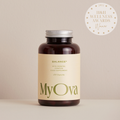
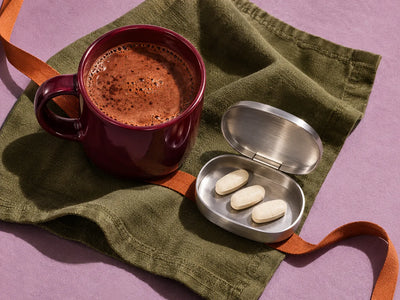
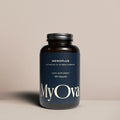
Magnesium and vitamin B6 contribute to the normal function of the nervous system and the reduction of tiredness and fatigue. A hot chocolate blend with magnesium (250 mg), vitamin B6, glycine, lavender and chamomile extract. Not suitable if you're pregnant or breastfeeding, or allergic to plants in the daisy (Asteraceae) family.
Curious about magnesium itself? Our guide to the best magnesium for sleep compares the forms and what the research shows.
Is chamomile safe, and who should avoid it?
In short: Likely safe in food and tea amounts for most people. Skip it or check first if you have daisy allergies, take blood thinners, or are pregnant.
NCCIH describes chamomile as "likely safe when used orally in amounts commonly found in teas and other foods" [9]. Side effects are uncommon and can include nausea, dizziness and allergic reactions [9]. In the period-pain trials, the only side effect reported was drowsiness, in four women in one trial [2].
Check with your GP or pharmacist before using chamomile regularly if any of these apply:
- You're allergic to ragweed, daisies, marigolds or chrysanthemums. Allergic reactions to chamomile are more likely if you react to related plants [9][10].
- You take a blood thinner such as warfarin. Interactions with warfarin and some drugs processed by the liver have been reported [9]. Merck notes chamomile may increase the effects of anticoagulants [10].
- You take sedatives, or drink alcohol in the evening. There are theoretical reasons chamomile could add to their effects [9][10].
- You take the pill, HRT or tamoxifen. Preliminary studies suggest chamomile might reduce the effect of birth control pills, and it may have some oestrogen-like effects [9]. Merck lists possible interference with tamoxifen, HRT and oestrogen-containing contraceptives [10].
- You're pregnant or breastfeeding. "Little is known" about chamomile's safety in pregnancy or while breastfeeding [9]. "It's just tea" isn't a safety guarantee, so ask your midwife or GP first.
None of this means chamomile is risky for most women. It means it deserves the same five-second check you'd give any supplement: read the label, check it against your medicines, and ask a pharmacist if you're unsure.
This article is for general information only and isn't medical advice. MyOva products are food supplements, not medicines, and aren't intended to diagnose, treat, cure or prevent any disease. Food supplements shouldn't replace a varied, balanced diet and healthy lifestyle. Speak to your GP or pharmacist before taking supplements if you're pregnant, breastfeeding, taking medication or managing a diagnosed condition.

When should period pain send you to your GP?
In short: See your GP if your periods get more painful, heavier or irregular, or the pain stops your usual day. Pain like that isn't normal.
Here's the part most chamomile articles skip. The trials above were in women with primary dysmenorrhoea, meaning period pain with no underlying cause. Conditions like endometriosis, adenomyosis and fibroids can cause severe period pain too, and herbal tea won't touch them.
The NHS says to see a GP if your periods become more painful, heavier or irregular, if period pain stops you doing your usual daily activities, if you have pain during sex or when going to the toilet, or if you're bleeding between periods [11]. If your period pain is severe or worse than usual and painkillers haven't helped, ask for an urgent GP appointment or contact NHS 111 [11].
For everyday period pain, the NHS suggests painkillers like paracetamol or ibuprofen, a warm bath or a hot water bottle on your tummy, massage and light exercise such as walking, swimming or cycling [11]. Those are the basics to try first. Chamomile, if you like it, sits alongside them, not instead of them.
If you've been told "it's just a bad period" for years, you're not imagining it. Our guide to period pain relief covers the options with the strongest evidence and how to push for answers if your pain isn't being taken seriously.
The hormone education you were never given
Clear, evidence-led emails from our founder Leila, plus 20% off your first order.*
Count me in →*New customers only. Can’t be combined with any other offer or bundles on our website.*New customers only. Not valid with other offers or bundles.
Frequently asked questions
How long before my period should I start drinking chamomile tea?
In the period-pain study, women drank two cups a day from one week before their period through the first five days of bleeding, for three cycles [1]. The PMS trial also started seven days before the period [3]. No study has tested other timings.
Does chamomile tea help period cramps straight away?
That hasn't been tested. The trials used daily chamomile starting a week before the period, not a single cup once cramps had started [1][3]. For pain that's already here, the NHS suggests painkillers like paracetamol or ibuprofen and heat, such as a hot water bottle [11].
Can I drink chamomile tea every day?
NCCIH says chamomile is likely safe in the amounts found in teas and foods [9]. If you take a blood thinner, sedatives, the pill, HRT or tamoxifen, or you're pregnant or breastfeeding, check with your GP or pharmacist first [9][10].
Does chamomile interact with the contraceptive pill?
Preliminary studies suggest chamomile might reduce the effect of birth control pills [9]. It isn't firmly established, but if you rely on the pill, mention regular chamomile use to your GP or pharmacist.
Is chamomile safe during pregnancy?
Little is known about chamomile's safety in pregnancy or while breastfeeding [9], so check with your midwife or GP before making it a regular habit. MyOva Magnesium Nightcap isn't suitable during pregnancy or breastfeeding.
Conclusion: the bottom line on chamomile
Chamomile is one of the few traditional herbs with period-specific trials behind it. Small studies found less period pain with two cups of tea a day, and milder PMS with 750 mg of chamomile powder a day, both started a week before the period [1][3]. Reviews call the results promising but the evidence thin [2][4]. It's likely safe in tea amounts for most people, with clear exceptions for daisy allergies, blood thinners, hormonal medicines and pregnancy. Enjoy the ritual, keep your expectations realistic, and if your pain is severe or getting worse, see your GP.
About the author
Leila Martyn is the founder of MyOva. She built MyOva for women who've been told "it's just your hormones" and sent away without answers. Her goal is for every woman to feel informed about her own cycle and confident asking for the care she needs.
A simple daily routine for your cycle
Cycle Support gives you vitamin B6, which contributes to the regulation of hormonal activity and the reduction of tiredness and fatigue, alongside chamomile and other botanicals.
Shop Cycle Support →Free UK shipping on orders of £50 and over.
Further reading
- Period Pain Relief: What Actually Works (Plus the PCOS Link)
- L-Theanine for PMS and Period Anxiety: What the Research Shows
- Rhodiola Rosea for Women: What the Research Shows
- Can't Sleep Before Your Period? Why It Happens and What Helps
- Best Magnesium for Sleep: 5 Forms Compared for Women
References
- Jenabi E, Ebrahimzadeh S. Chamomile tea for relief of primary dysmenorrhea. Iranian Journal of Obstetrics, Gynecology and Infertility. 2010;13(1):39-42.
- Niazi A, Moradi M. The effect of chamomile on pain and menstrual bleeding in primary dysmenorrhea: a systematic review. International Journal of Community Based Nursing and Midwifery. 2021;9(3):174-186.
- Najafi Mollabashi E, Ziaie T, Bostani Khalesi Z, Kazemnejad Leili E, Bekhradi R. Effect of chamomile capsule on premenstrual syndrome symptoms relief. Iranian Journal of Obstetrics, Gynecology and Infertility. 2018;21(7):72-80.
- Bostani Khalesi Z, Pirdadeh Beiranvand S, Bokaie M. Efficacy of chamomile in the treatment of premenstrual syndrome: a systematic review. Journal of Pharmacopuncture. 2019;22(4):204-209.
- Viola H, Wasowski C, Levi de Stein M, et al. Apigenin, a component of Matricaria recutita flowers, is a central benzodiazepine receptors-ligand with anxiolytic effects. Planta Medica. 1995;61(3):213-216.
- Srivastava JK, Shankar E, Gupta S. Chamomile: a herbal medicine of the past with bright future. Molecular Medicine Reports. 2010;3(6):895-901.
- Hieu TH, Dibas M, Surya Dila KA, et al. Therapeutic efficacy and safety of chamomile for state anxiety, generalized anxiety disorder, insomnia, and sleep quality: a systematic review and meta-analysis of randomized trials and quasi-randomized trials. Phytotherapy Research. 2019;33(6):1604-1615.
- Chang SM, Chen CH. Effects of an intervention with drinking chamomile tea on sleep quality and depression in sleep disturbed postnatal women: a randomized controlled trial. Journal of Advanced Nursing. 2016;72(2):306-315.
- National Center for Complementary and Integrative Health. Chamomile: Usefulness and Safety. Last updated November 2024.
- Merck Manual Professional Version. Chamomile. Reviewed July 2025.
- NHS. Period pain. Reviewed 18 March 2026.
- Department of Health and Social Care. Great Britain nutrition and health claims (NHC) register.