





































PMDD vs Severe PMS: How to Tell the Difference (And Why It Matters)
You feel it coming. A few days before your period, sometimes longer, something shifts, and not just in your body. Your mood drops off a cliff. Anxiety spikes out of nowhere. You snap at the people you love, then drown in guilt about it. You lie awake at 3am convinced something is fundamentally wrong with you.
Then your period starts, and within a day or two you feel like yourself again.
If that pattern sounds familiar, you're not imagining it. You are not "too sensitive" and you are not failing at emotional regulation. The question is whether it's severe PMS or premenstrual dysphoric disorder (PMDD), because the two are not the same thing, and getting it wrong can cost years. Here is the plain answer: PMDD is a diagnosed condition with formal criteria, it is defined by severe mood symptoms that disrupt daily life, and the best way to tell the difference is to track your symptoms across at least two cycles.

In this guide:
- What is PMS, and how common is it?
- What is PMDD, and how is it different?
- How is PMDD diagnosed?
- Why is PMDD so often misdiagnosed?
- What is happening in the brain in PMDD?
- How do you track symptoms for a diagnosis?
- What treatments are available?
- Can supplements help?
- When should you see a GP, and what should you ask for?
- Frequently asked questions
What Is PMS, and How Common Is It?
In short: PMS is a cluster of physical and emotional symptoms in the two weeks before a period. It's common, real and worth taking seriously.
Premenstrual syndrome (PMS) is not a myth and it's not weakness. It describes symptoms that show up in the luteal phase, the second half of your cycle after ovulation, and settle within a few days of your period starting. The NHS says most women have PMS at some point [1]. Royal College of Obstetricians and Gynaecologists (RCOG) guidance puts it at around four in ten women, and says that of these, 5 to 8 percent have severe PMS [2].
Common symptoms include bloating, breast tenderness, headaches, fatigue, food cravings, disrupted sleep, irritability and low mood. For most women these are uncomfortable but manageable. PMS doesn't have formal diagnostic criteria. It's identified from your symptom history and timing, and by checking that something else isn't causing the symptoms.
What Is PMDD, and How Is It Different from PMS?
In short: PMDD is a distinct diagnosis, not a dramatic version of PMS. Mood symptoms are severe enough to disrupt work, relationships and daily life.
PMDD is classified in the DSM-5, the diagnostic manual used in psychiatry, as a depressive disorder [3]. The core difference from PMS is functional impairment: the symptoms are severe, they come back cycle after cycle, and they get in the way of work, relationships and everyday life.
It is much less common than PMS. A 2024 University of Oxford-led meta-analysis of 44 studies found a pooled prevalence of 3.2% when the diagnosis was confirmed with prospective tracking, and 7.7% when it was only provisional. In community samples with a confirmed diagnosis, it was 1.6%. The authors warned that provisional diagnoses probably overstate how common PMDD is [4]. So the honest number is a few in 100, not the "up to 8%" often quoted online.
How Is PMDD Diagnosed?
In short: DSM-5 needs five of eleven symptoms in the week before your period, including a core mood symptom, confirmed over two cycles.
To meet DSM-5 criteria, you need at least five of eleven listed symptoms in the final week before your period. The symptoms must start to improve within a few days of bleeding starting and be minimal or absent in the week after your period. At least one must be a core mood symptom. They have to cause significant distress or interfere with life, and they can't simply be a flare-up of another condition such as depression [3, 5].
The four core mood symptoms are:
- Marked low mood, hopelessness or self-critical thoughts.
- Marked anxiety, tension or feeling keyed up or on edge.
- Marked mood swings, such as suddenly feeling tearful or more sensitive to rejection.
- Persistent, marked irritability, anger or increased conflict with others.
The remaining symptoms that can count toward the five are loss of interest in usual activities, trouble concentrating, fatigue or low energy, big changes in appetite or cravings, sleeping too much or too little, feeling overwhelmed or out of control, and physical symptoms such as breast tenderness, joint or muscle pain, bloating or weight gain [3].
Here's the part people miss. A confirmed diagnosis needs symptoms recorded prospectively, meaning daily as they happen, across at least two symptomatic cycles. A provisional diagnosis can be made before that [3]. Tracking isn't optional if you want answers.
PMS vs PMDD at a glance
| PMS | PMDD | |
|---|---|---|
| How common | About 4 in 10 women have symptoms; 5 to 8 percent of those have severe PMS [2] | 1.6% to 3.2% with a confirmed diagnosis [4] |
| Main symptoms | A mix of physical and emotional | At least one core mood symptom is required |
| Impact | Uncomfortable; mild to moderate for most | Significant distress or disruption to daily life |
| Formal criteria | No DSM-5 criteria | Yes, DSM-5 [3] |
| After your period | Symptoms usually settle | Symptoms ease within days; minimal or absent the week after |
| How it's confirmed | Symptom history and timing | Daily tracking across at least two cycles |
Why Is PMDD So Often Misdiagnosed?
In short: PMDD comes and goes with your cycle, so a single appointment can miss it, and the cyclical pattern is often never asked about.
PMDD is cyclical. Symptoms are severe in the luteal phase and then fade, so if you see a GP in a good week you may look fine. You describe anxiety, low mood, rage or intrusive thoughts, and you can leave with a depression or anxiety diagnosis without anyone asking when in your cycle it happens. The key question, "do your symptoms follow a pattern in relation to your period?", often never gets asked.
The evidence on this is thin but consistent. In a small UK interview study of four women with a PMDD diagnosis, all four had previously been given a diagnosis of major depression or generalised anxiety disorder, and awareness of the cyclical pattern was what led to the right diagnosis. It's only a conference abstract with four participants, so it can't tell us how common this is [6]. A University of Oxford news release on the prevalence research also said GPs' knowledge about PMDD is "very variable" [7].
Part of the problem is structural. PMDD sits between gynaecology and psychiatry, and neither has historically owned it. Understanding your own pattern, and bringing it as tracked data, is often what gets you taken seriously. Your diagnosis is a starting point, not a verdict, and so is the lack of one.
What Is Happening in the Brain in PMDD?
In short: Research points to an unusual brain response to normal hormone shifts, not abnormal hormone levels. The biology is still not fully understood.
The "it's just hormones" story falls apart here. The best-known evidence is a 1998 randomised trial in which researchers switched off the ovarian cycle with a drug, then added back oestrogen or progesterone. In women with severe premenstrual symptoms, mood symptoms returned after the hormones were added back. Women without such symptoms had no mood changes. The authors concluded this reflects an abnormal response to normal hormone changes, not abnormal hormones [8].
One leading theory involves allopregnanolone, a by-product of progesterone that normally acts on GABA receptors, the brain's main calming system. A 2020 review argued PMDD may involve an impaired GABA response to the rise and fall of allopregnanolone across the cycle [9]. A later review adds that imaging studies are limited but support changes in serotonin and GABA signalling, and that so far the findings don't fit neatly together [10].
So treat all of this as a working model, not a settled explanation. What the evidence does support is the practical point: this is a sensitivity to normal hormonal change, not a character flaw and not poor coping.
How Do You Track Symptoms for a Diagnosis?
In short: Rate your symptoms daily for at least two full cycles, noting your cycle day, then take that written pattern to your GP appointment.
The usual research and clinical tool is the Daily Record of Severity of Problems (DRSP), a daily rating scale that has been tested for reliability and validity in women meeting PMDD criteria [11]. You don't need the clinical form to start. A simple daily log works as a first step:
- Start a daily log. Note the date, your cycle day and each symptom's severity on a scale of 1 to 5.
- Look for the PMDD pattern. That means a clear symptom-free stretch after your period, symptoms that start in the week before it, rapid improvement once bleeding starts, real impact on work or relationships, and mood symptoms leading the picture.
- Track two full cycles. Don't draw conclusions from one month.
- Take it to a clinician. Bring the tracked data to your GP or a specialist with an interest in hormonal mood conditions.
Here is the pattern at a glance.

What Treatments Are Available for PMDD?
In short: Options include SSRIs, a drospirenone-containing pill, CBT and, for severe cases, GnRH analogues. Your GP can talk you through them.
You don't have to simply endure this. RCOG's guideline for severe PMS lists the main medical options, and PMDD is managed along similar lines [2].
SSRIs. Antidepressants of the SSRI type are recommended for severe PMS and can be taken continuously or just in the luteal phase. A 2024 Cochrane review of 34 trials found SSRIs reduced symptoms compared with placebo, but caused more side effects such as nausea and low energy. It also suggested continuous dosing may work better than luteal-phase dosing, which an earlier Cochrane review had not found, so reviews disagree on that point [12, 13].
Combined pill containing drospirenone. RCOG says this can be considered as a first-line option [2]. A 2023 Cochrane review of five trials, mostly in women with PMDD, found a modest benefit with more side effects, and rated the evidence as ranging from very low to moderate certainty [14]. Other pills can behave differently for different women, so this is a conversation for your GP or gynaecologist.
Cognitive behavioural therapy (CBT). RCOG says CBT should be considered routinely [2]. A meta-analysis of randomised trials found psychological treatment reduced anxiety and depression symptoms in PMS, although the authors rated the evidence as low quality [15].
GnRH analogues. For severe cases that haven't responded to other treatments, these drugs switch off the ovarian cycle. A 2025 Cochrane review found them effective but with frequent menopause-like side effects, and long-term safety evidence is limited, which is why add-back hormone therapy is considered [16].
Exercise and lifestyle. A 2020 systematic review of 15 trials suggested exercise may help PMS symptoms, with the authors noting uncertainty because most trials had a high risk of bias [17]. Sleep, stress and food habits are worth looking at too, but they are rarely enough on their own in moderate to severe PMDD. Our guides to nervous system regulation and blood sugar balance cover the practical side.
Whatever you're prescribed, don't stop or change medicine without speaking to your GP first.
Can Supplements Help with PMDD?
In short: No supplement treats PMDD. Evidence for options like calcium and vitex is mixed, and it mostly comes from PMS, not confirmed PMDD.
Let's be straight about this. A food supplement isn't a treatment for PMDD and can't replace medical care. RCOG's guideline says there is conflicting evidence for some complementary medicines. It notes that calcium, with or without vitamin D, and vitex both showed benefit in trials for PMS, but that preparations vary, and that vitamin B6 results are mixed, with the Department of Health limiting the daily dose to 10 mg [2]. Those are PMS findings, not confirmed PMDD, so don't read them as proof for PMDD.
If you do want to try one, treat it as a trial alongside your tracking, not instead of a diagnosis. Read the label, and mention it to your GP.

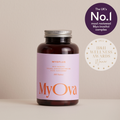
Broccoli extract, KSM-66® ashwagandha, turmeric, L-theanine, 5-HTP, chamomile and rhodiola, with vitamin B6, which contributes to normal psychological function and to the regulation of hormonal activity. Two capsules a day. Vegan.
Safety first. Cycle Support contains 5-HTP, which is a serotonin precursor. Medical guidance advises that people taking SSRIs, MAOIs or other serotonergic medicines should not take 5-HTP without their doctor's supervision [18]. Many women with PMDD are prescribed an SSRI, so speak to your GP or pharmacist before taking it if that's you. It is not suitable in pregnancy or breastfeeding, and you should also check first if you take other prescribed medicines, including hormonal treatments, or have a liver condition, because liver injury has been reported with ashwagandha products [19]. Don't take extra vitamin B6 on top of it.
When Should You See a GP, and What Should You Ask For?
In short: See your GP with two cycles of tracked data and ask about PMDD by name. If you have thoughts of self-harm, get help now.
- Track first. Bring two cycles of daily data with severity ratings and cycle days.
- Ask specifically about PMDD. Not "I feel bad before my period", but "my symptoms start in the week before my period and ease within days of bleeding starting, and I'd like to discuss PMDD."
- Ask about a referral. If your GP has limited experience, ask about a gynaecologist or psychiatrist with a special interest in premenstrual disorders.
- Know the options exist. SSRIs, a drospirenone-containing pill, CBT and GnRH analogues are all part of the evidence base.
The International Association for Premenstrual Disorders (iapmd.org) offers peer support and information if you want to talk to others who get it.
If you are in crisis: PMDD is linked to higher odds of suicidal thoughts and suicide attempts than in women without it. A 2021 meta-analysis found odds ratios of about 4 for suicidal ideation and about 7 for attempts [20]. If you are having thoughts of harming yourself, contact your GP urgently, call NHS 111, or call Samaritans free on 116 123, 24 hours a day. If you are in immediate danger, call 999. You deserve support right now.
Frequently Asked Questions
Can I have PMDD if I have regular periods?
Yes. PMDD is about how you respond to normal hormone changes across the cycle, not about irregular periods. Women with regular, predictable cycles can and do have it.
How is PMDD different from depression?
The key difference is the pattern. Depression typically persists across the cycle, while PMDD symptoms are confined to the days before your period and ease soon after it starts. The two can co-exist, which is why accurate tracking matters.
Does the pill help PMDD?
It depends on the type and the person. RCOG says a drospirenone-containing pill can be considered, but side effects are more common and not everyone responds. Talk to your GP or gynaecologist [2, 14].
Can PMDD get worse over time?
Some women report that symptoms change after pregnancy or around perimenopause, but good evidence on this is limited. If your pattern changes, tell your GP.
Is PMDD genetic?
Partly, as far as we know. Twin studies suggest premenstrual symptoms are moderately heritable, with estimates of around 44% to 56%, but these studies looked at premenstrual symptoms in general rather than a PMDD diagnosis, and the specific genes haven't been identified [21, 22, 10].
Can lifestyle changes make a difference?
They can help with symptoms for some women, and exercise has the best trial support, but the evidence has weaknesses and lifestyle change is rarely enough alone in moderate to severe PMDD [17].
The Bottom Line
PMS and PMDD are not the same thing. PMS is common, uncomfortable and real. PMDD is a diagnosis with formal criteria, severe mood symptoms and real impact on life, and it affects a few in 100 women. The difference isn't about toughness or sensitivity. It's about a pattern you can track and a clinician can act on.
Hormonal literacy isn't complicated, it's just rarely taught. Track your cycle, document the pattern and take it to someone who knows what to do with it. Your body is trying to tell you something, and understanding it is where you start.
Related Reading
- PMDD Support: A Guide to Understanding PMDD and Supporting Your Cycle Naturally
- 9 Signs of Low Progesterone (And What Your Body Might Be Telling You)
- Why Vitamin B6 Keeps Coming Up in PMS Research (And What Form Actually Works)
- Why Nervous System Regulation Matters for Hormone Health, Menstrual Cycles, and PMS
- Blood Sugar Balance: An Underrated Tool for Women’s Hormone Health
- Ashwagandha Benefits for Women: A Comprehensive Guide
- Luteal Phase: 7 Signs, Symptoms and What Actually Helps
This article is for educational purposes only and does not constitute medical advice. MyOva products are food supplements, not medicines, and are not intended to diagnose, treat, cure or prevent any disease. If you think you may have PMDD, speak to your GP or a qualified healthcare professional. If you are having thoughts of self-harm, contact Samaritans on 116 123 (free, 24/7) or your GP urgently.
References
- NHS. Premenstrual syndrome (PMS). Last reviewed 18 June 2024. nhs.uk/conditions/pre-menstrual-syndrome/
- Green LJ, O'Brien PMS, Panay N, Craig M. Management of premenstrual syndrome. RCOG Green-top Guideline No. 48. BJOG. 2017. doi:10.1111/1471-0528.14260
- American Psychiatric Association. Diagnostic and Statistical Manual of Mental Disorders, 5th Edition (DSM-5). Washington, DC: APA; 2013. Premenstrual dysphoric disorder criteria, pp. 171-175.
- Reilly TJ, Patel S, Unachukwu IC, Knox C-L, Wilson CA, Craig MC, et al. The prevalence of premenstrual dysphoric disorder: systematic review and meta-analysis. J Affect Disord. 2024;349:534-540. doi:10.1016/j.jad.2024.01.066
- Epperson CN, Steiner M, Hartlage SA, Eriksson E, Schmidt PJ, Jones I, et al. Premenstrual dysphoric disorder: evidence for a new category for DSM-5. Am J Psychiatry. 2012;169(5):465-475. doi:10.1176/appi.ajp.2012.11081302
- Pradhan A. Pardon my sobbing: a qualitative study on differentiating generalised mood disorders from premenstrual dysphoric disorder (conference abstract). BJPsych Open. 2022;8(Suppl 1):S68. doi:10.1192/bjo.2022.235
- University of Oxford. New data shows prevalence of Premenstrual Dysphoric Disorder (PMDD). News release, 30 January 2024. ox.ac.uk/news/2024-01-30-new-data-shows-prevalence-premenstrual-dysphoric-disorder
- Schmidt PJ, Nieman LK, Danaceau MA, Adams LF, Rubinow DR. Differential behavioral effects of gonadal steroids in women with and in those without premenstrual syndrome. N Engl J Med. 1998;338(4):209-216. doi:10.1056/NEJM199801223380401
- Hantsoo L, Epperson CN. Allopregnanolone in premenstrual dysphoric disorder (PMDD): evidence for dysregulated sensitivity to GABA-A receptor modulating neuroactive steroids across the menstrual cycle. Neurobiol Stress. 2020;12:100213. doi:10.1016/j.ynstr.2020.100213
- Hantsoo L, Payne JL. Towards understanding the biology of premenstrual dysphoric disorder: from genes to GABA. Neurosci Biobehav Rev. 2023;149:105168. doi:10.1016/j.neubiorev.2023.105168
- Endicott J, Nee J, Harrison W. Daily Record of Severity of Problems (DRSP): reliability and validity. Arch Womens Ment Health. 2006;9(1):41-49. doi:10.1007/s00737-005-0103-y
- Marjoribanks J, Brown J, O'Brien PMS, Wyatt K. Selective serotonin reuptake inhibitors for premenstrual syndrome. Cochrane Database Syst Rev. 2013:CD001396.pub3. doi:10.1002/14651858.CD001396.pub3
- Jespersen C, Lauritsen MP, Frokjaer VG, Schroll JB. Selective serotonin reuptake inhibitors for premenstrual syndrome and premenstrual dysphoric disorder. Cochrane Database Syst Rev. 2024:CD001396.pub4. doi:10.1002/14651858.CD001396.pub4
- Ma S, Song SJ. Oral contraceptives containing drospirenone for premenstrual syndrome. Cochrane Database Syst Rev. 2023;(6):CD006586.pub5. doi:10.1002/14651858.CD006586.pub5
- Busse JW, Montori VM, Krasnik C, Patelis-Siotis I, Guyatt GH. Psychological intervention for premenstrual syndrome: a meta-analysis of randomized controlled trials. Psychother Psychosom. 2009;78(1):6-15. doi:10.1159/000162296
- Naheed B, Kuiper JH, O'Mahony F, O'Brien PMS. Gonadotropin-releasing hormone (GnRH) analogues for treating premenstrual syndrome (PMS). Cochrane Database Syst Rev. 2025:CD011330.pub2. doi:10.1002/14651858.CD011330.pub2
- Pearce E, Jolly K, Jones LL, Matthewman G, Zanganeh M, Daley A. Exercise for premenstrual syndrome: a systematic review and meta-analysis of randomised controlled trials. BJGP Open. 2020;4(3):bjgpopen20X101032. doi:10.3399/bjgpopen20X101032
- Memorial Sloan Kettering Cancer Center. 5-HTP. Updated 2 June 2022. mskcc.org/cancer-care/integrative-medicine/herbs/5-htp-01
- Björnsson HK, Björnsson ES, Avula B, et al. Ashwagandha-induced liver injury: a case series from Iceland and the US Drug-Induced Liver Injury Network. Liver Int. 2020;40(4):825-829. doi:10.1111/liv.14393
- Prasad D, Wollenhaupt-Aguiar B, Kidd KN, de Azevedo Cardoso T, Frey BN. Suicidal risk in women with premenstrual syndrome and premenstrual dysphoric disorder: a systematic review and meta-analysis. J Womens Health. 2021;30(12):1693-1707. doi:10.1089/jwh.2021.0185
- Treloar SA, Heath AC, Martin NG. Genetic and environmental influences on premenstrual symptoms in an Australian twin sample. Psychol Med. 2002;32(1):25-38. doi:10.1017/S0033291701004901
- Kendler KS, Karkowski LM, Corey LA, Neale MC. Longitudinal population-based twin study of retrospectively reported premenstrual symptoms and lifetime major depression. Am J Psychiatry. 1998;155(9):1234-1240. doi:10.1176/ajp.155.9.1234

Leila Martyn
Leila is the founder of MyOva, a UK-based hormonal health brand for women with PMOS (PCOS), perimenopause, PMDD and fertility challenges. Drawing on lived experience and scientific research, she shares evidence-based guidance to help women understand their hormones and cycles.
Discover your perfect product in under a minute!
References