

















Strength Training for Hormones: Why Lifting Beats Cardio for PCOS
If your PCOS toolkit is basically "do more cardio and eat less," here is the thing nobody told you: that advice is incomplete. You're not imagining it. It's possible to run yourself into the ground on the treadmill three times a week and still watch your insulin resistance, your weight, and your cycle refuse to budge.
Here's the promise. Strength training, the kind with weights, resistance bands, or your own bodyweight, does something cardio alone can't. It builds the exact tissue your body uses to clear glucose from your blood. That's not a wellness slogan, that's basic physiology, and it's a big part of why lifting tends to move the needle on insulin resistance in ways that hours on the elliptical often don't.
The key answer, before we go any further: skeletal muscle is responsible for over 80% of the glucose your body clears after a meal.[1] More muscle, more places for that glucose to go, and less of it sitting around in your bloodstream doing damage. Cardio has its place. But if insulin resistance is your specific problem, and for most women with PCOS it is, strength training deserves to be the main event, not the afterthought.
We hear a version of the same story constantly. A woman gets a PCOS or insulin resistance diagnosis, gets handed a generic "move more, eat less" handout, and spends a year doing cardio five days a week with nothing to show for it except exhaustion. Then she adds two strength sessions a week, keeps everything else roughly the same, and finally starts seeing her labs, her energy, and her cycle shift. That pattern isn't a coincidence. It's what happens when the exercise actually matches the mechanism behind the problem.

Why does strength training help with hormonal health?
Short answer: Muscle is your biggest glucose storage tank. Building more of it gives insulin an easier, more efficient job to do.
Let's talk about what insulin resistance actually is, because it gets thrown around as a scary diagnosis when in fact it's a mechanical problem with a mechanical fix available to you. Insulin's job is to usher glucose out of your blood and into your cells. When your cells stop listening properly, your pancreas pumps out more and more insulin to get the same result. That excess insulin is a major driver of the classic PCOS picture: irregular cycles, acne, stubborn weight around the middle, and higher testosterone.
Skeletal muscle is where the majority of that post-meal glucose is supposed to land.[1] Every strength training session forces your muscles to burn through and then restock their glycogen stores, which pulls glucose out of your bloodstream both during the workout and for hours afterward. Over time, resistance training also increases the number of GLUT4 transporters, the proteins that physically shuttle glucose into your muscle cells, making the whole system more responsive to the insulin you already have. Some of this glucose uptake even happens independently of insulin, through muscle contraction itself, which is part of why a hard strength session can lower blood sugar even on days when your insulin response is sluggish.
This isn't a fringe theory. A 2021 meta-analysis of 12 randomized controlled trials found that resistance training significantly reduced HOMA-IR, a standard marker of insulin resistance, along with meaningful drops in HbA1c, a longer-term blood sugar marker.[2] The research on this is actually pretty clear: build more muscle, and you build more capacity to handle the glucose your body is producing.
Is cardio bad for PCOS and insulin resistance?
Short answer: No, but cardio alone often isn't enough. It burns calories in the moment, strength training changes your metabolism at rest.
Cardio is not the enemy here. Vigorous aerobic exercise has real, documented benefits for PCOS, including a meaningful reduction in HOMA-IR in a 2020 systematic review and meta-analysis of exercise interventions.[3] Nobody is telling you to throw out your trainers.
The problem is what happens when cardio becomes the entire strategy. A 45-minute run burns calories while you're running, and then it's over. Your metabolism goes back to baseline fairly quickly once you stop moving. Muscle works differently. More lean muscle mass raises the amount of energy your body burns just existing, at your desk, asleep, scrolling your phone, because muscle tissue is metabolically active tissue. Cardio spends energy. Strength training builds the infrastructure that spends energy for you, around the clock.
There's also a body composition piece that gets overlooked. Two women can weigh the same number on the scale and have meaningfully different metabolic pictures depending on how much of that weight is muscle versus fat. Chasing the number on the scale through cardio alone can quietly shrink muscle mass along with fat, especially if you're also eating less, which works against the exact insulin sensitivity you're trying to improve. Strength training protects and builds the tissue you actually want to keep.
There's also a practical reality for a lot of women in this audience: chronic cardio can be genuinely hard on a body that's already dealing with fatigue, disrupted sleep, or cycle irregularity. If you've been told to "just run it off" and instead felt more exhausted, more ravenous, and no closer to feeling better, that's worth paying attention to. That's not a personal failure. It's a sign the approach doesn't match the problem.

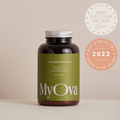
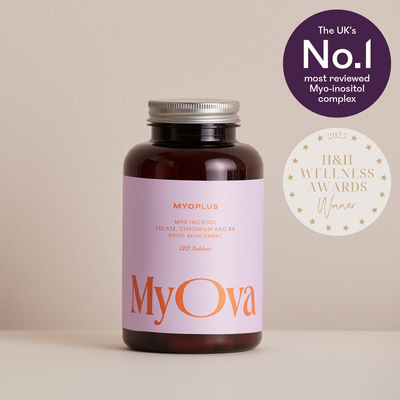
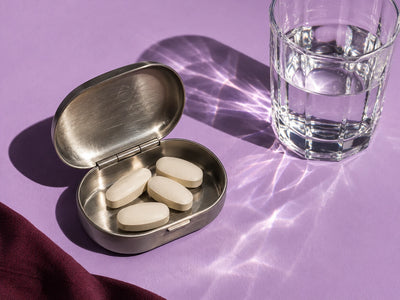
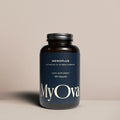
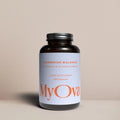
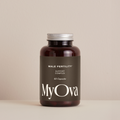
Metabolism brings together 2000mg of myo-inositol, the most researched nutrient in PCOS nutrition science, alongside chromium, which contributes to the maintenance of normal blood glucose levels, plus alpha lipoic acid and cinnamon. It's not a substitute for medical treatment and it works best alongside a balanced diet and regular movement, strength training included.
Does strength training help with testosterone and PCOS symptoms beyond insulin?
Short answer: The clearest PCOS-specific evidence for strength training isn't just insulin, it's a drop in free androgen index, a key testosterone marker.
Here's where we're going to be straight with you, because half-truths don't help anyone. When researchers looked specifically at short PCOS trials (six to twenty-six weeks), resistance training on its own didn't always produce a dramatic drop in HOMA-IR. In the same 2020 review, it actually showed the biggest improvements in free androgen index, the calculation used to estimate how much active testosterone is circulating in your blood, out of every exercise type studied.[3] A more recent 2025 network meta-analysis of 19 trials and over 800 women with PCOS found something similar: aerobic and interval training edged out resistance training alone for short-term HOMA-IR changes, in trials that mostly ran a matter of weeks.[4]
Two things can be true at once. First, the mechanism connecting muscle mass to long-term insulin sensitivity is well established in broader, longer-running research, including the elderly and type 2 diabetes populations, where resistance training programs lasting more than twelve weeks show clearer improvements than shorter ones.[2] Second, PCOS-specific trials are often short, small, and test resistance training almost entirely on its own, without the nutrition or lifestyle support that tends to come with it in real life. That's not a reason to skip strength training, it's a reason to treat it as a long game and to pair it with the nutrition and lifestyle habits that support it, rather than expecting six weeks of squats to undo a decade of insulin resistance on their own.
For androgen symptoms specifically, like acne, excess hair growth, and hair thinning, strength training's ability to lower free androgen index gives it a genuine edge that cardio-only routines don't have in the same research.[3] Your diagnosis is a starting point, not a verdict, and the exercise you choose is one lever, not the only one.
Can too much cardio raise cortisol and work against your hormones?
Short answer: Chronic, high-volume endurance training can disrupt your body's normal cortisol rhythm, especially without enough recovery.
Cortisol is not a villain. It's a normal, necessary stress hormone that rises in the morning and tapers off through the day. The issue is what happens under sustained, excessive training load without adequate recovery. A 2020 study measuring salivary cortisol in female long-distance runners found that healthy runners training within their limits kept a normal cortisol rhythm, but athletes under heavier, more chronic training loads showed a disrupted pattern, including a blunted morning cortisol peak.[5] That's the endocrine signature of a body that's being asked to do too much without enough time to recover.
This matters for PCOS, endometriosis, and PMDD specifically, because these are conditions where the hormonal system is already working overtime. Piling chronic, high-intensity cardio on top of an already dysregulated stress response is rarely the win it's marketed as. This isn't permission to skip movement. It's permission to stop treating "more cardio" as the automatic answer when your body is asking for something different, like adequate rest days, strength work at a sustainable intensity, and food that actually fuels you.
Strength training, done at a sensible frequency with rest days built in, tends to be a gentler load on your stress system than daily hard cardio sessions, while still delivering the metabolic benefits you're actually after. Sleep is part of this picture too. A disrupted cortisol rhythm and poor sleep tend to feed each other, and poor sleep on its own is linked to worse insulin sensitivity the next day, which is one more reason chronic, under-recovered training can quietly work against the goal it's supposed to support.
How often should you strength train each week?
Short answer: The NHS recommends strengthening exercises that work all major muscle groups on at least two days a week, and that's a genuinely solid starting target.
You do not need to live in a gym for this to work. NHS guidance for adults recommends strengthening activities covering the legs, hips, back, abdomen, chest, shoulders, and arms on at least two days a week, working each muscle group to the point where you'd need a short rest before repeating the movement.[6][7] Two sessions a week is a legitimate, evidence-backed target, not a compromise.
If you're just starting out, two full-body sessions a week, roughly 30 to 45 minutes each, is plenty to see meaningful change over a few months. As you get stronger and more confident, three sessions a week with a day of rest between them tends to be the sweet spot for most women managing PCOS, endometriosis, or perimenopause symptoms alongside work, kids, and everything else on the list. More isn't automatically better here. Consistency beats intensity, every time.
Focus each session around compound movements, exercises that work several muscle groups at once, like squats, rows, presses, and hip hinges. They give you more insulin-sensitizing muscle recruitment per minute than isolation moves like bicep curls, which is exactly what you want when time is tight and consistency matters more than variety.
What is progressive overload and why does it matter?
Short answer: Progressive overload means gradually asking your muscles to do a little more over time, which is what actually drives adaptation.
Progressive overload is the single most useful concept in strength training and almost nobody explains it clearly. The idea, laid out in the American College of Sports Medicine's position stand on resistance training progression, is simple: your body only adapts when it's asked to do slightly more than it's used to.[8] That could mean a heavier dumbbell, one more rep, one more set, a slower lowering phase, or a shorter rest between sets. It does not mean doubling your weights every week or grinding yourself into the ground.
In practice, that looks like this. Week one, you do 3 sets of 10 squats with a weight that feels challenging by the last two reps. Week three or four, once 10 reps feels easy, you add a little weight or add a rep. That's it. That's the whole system. It's not glamorous, but it's the mechanism behind every strength gain you'll ever make, and it's exactly what your muscles need to keep building the glucose-clearing capacity we talked about earlier.
Write your sessions down, even roughly, in your phone notes. You cannot progressively overload what you don't remember doing last time. And progression doesn't have to be linear or perfect. A rough guide is to increase reps, weight, or sets by a small amount every one to two weeks, and to expect some weeks where you simply repeat what you did before, particularly around a heavy period, a stressful work week, or a PMDD crash. That's still progress. Consistency, not perfection, is what actually builds the adaptation.
If something hurts in a sharp, joint-level way rather than the normal muscle fatigue of a hard set, stop and reassess your form, or get it checked. Progressive overload should feel like effort, not injury.

Do you need a gym to start strength training?
Short answer: No. Bodyweight moves, resistance bands, and a couple of dumbbells at home cover everything a beginner needs.
A gym membership is not a prerequisite here, no matter what your feed is telling you. Your own bodyweight provides enough resistance to build real strength when you're starting out, and it's the entire premise behind moves like squats, lunges, push-ups, and glute bridges. A set of resistance bands costs less than a single restaurant meal out and packs flat in a drawer. A pair of adjustable dumbbells is the next natural upgrade once bodyweight alone stops feeling challenging.
What you actually need is a plan you'll stick to, not equipment you'll feel guilty about not using. If a living room, a yoga mat, and 30 minutes twice a week is realistic for your life right now, that beats an ambitious gym routine you abandon by week three.
If you do eventually want to move to a gym, the transition is easy because the movement patterns don't change. A bodyweight squat becomes a goblet squat, then a barbell squat. A resistance band row becomes a cable row, then a barbell row. Nothing you learn at home gets wasted, it just scales up when and if you want it to.
What does a beginner strength training week actually look like?
Here's a genuinely doable starting point, no equipment required beyond a couple of household items if you want them:
- Day 1, full body: Bodyweight squats, glute bridges, push-ups (on your knees if needed), bent-over rows with a household object or light dumbbells, and a plank hold. Three sets of 8 to 12 reps per move.
- Day 2, rest or gentle movement: Walking, stretching, or your usual daily activity. Recovery is part of the plan, not a gap in it.
- Day 3, full body: Repeat Day 1's structure, but try to add one more rep per set than last time, or use slightly more resistance.
- Days 4 to 7: Move your body in whatever way feels good, cardio included if you enjoy it, plus at least one more full rest day.
Give this four to six weeks before judging the results. Strength adaptations happen fast, but the insulin sensitivity and body composition changes that actually matter for PCOS symptoms build gradually, over months, not days.[2]
Give your hormones the full picture
Strength training builds the muscle that helps your body manage glucose, and Metabolism gives you everyday nutritional support alongside it.
Shop Metabolism →Free UK shipping on orders of £50 and over.
Frequently Asked Questions
Do I need to lift heavy weights to see hormonal benefits?
No. Consistency and progressive overload matter more than the number on the dumbbell. Bodyweight and light resistance work well when you're building the habit.
Will strength training make me bulky?
Building significant muscle bulk takes years of dedicated training, specific nutrition, and often factors most women aren't aiming for. Hormonal profiles that favor easy muscle gain aren't the default for most women with PCOS or perimenopause. Twice-weekly sessions build strength, tone, and metabolic health, not bulk.
Can I do strength training during my period or a PMDD crash week?
Listen to your body. Many women feel fine to train, sometimes lighter or shorter, through their period. If fatigue or pain is severe, rest is the right call, and picking the plan back up the next week is completely fine.
How long until I notice a difference in my symptoms?
Strength itself improves within weeks. Hormonal and metabolic markers like insulin resistance tend to shift more gradually, often over three to six months of consistent training.
Is strength training safe with endometriosis?
Generally yes, and many women find it helps with overall pain resilience, but check with your GP or a pelvic health physiotherapist first, particularly around heavier lifting or core-intensive moves during a flare.
Should I combine strength training with cardio, or pick one?
Combine them. Cardio has real cardiovascular and mood benefits, and walking in particular is a genuinely underrated tool for insulin sensitivity. Strength training should simply stop being the thing you skip in favor of cardio alone.
Do I need a personal trainer to start?
Not necessarily. Plenty of free, reputable beginner programs exist online. A trainer or physiotherapist is worth it if you have an injury history, chronic pain, or want personalized form checks.
Can supplements replace exercise for insulin resistance?
No. Food supplements are not a substitute for a varied, balanced diet or for physical activity. They're designed to sit alongside those habits, not replace them.
References
- Merz KE, Thurmond DC. Role of Skeletal Muscle in Insulin Resistance and Glucose Uptake. Comprehensive Physiology. 2020;10(3):785-809.
- Li J, Li J, Lu Y. Effects of resistance training on insulin sensitivity in the elderly: A meta-analysis of randomized controlled trials. Journal of Exercise Science & Fitness. 2021;19(4):241-251.
- Patten RK, Boyle RA, Moholdt T, et al. Exercise Interventions in Polycystic Ovary Syndrome: A Systematic Review and Meta-Analysis. Frontiers in Physiology. 2020;11:606.
- Tan Y, Liu Y, Koga A, Yuan Y, Yu H, Liu J. The Effects of Different Exercises on Insulin Resistance and Testosterone Changes in Women with Polycystic Ovarian Syndrome: A Network Meta-Analysis Study. Healthcare (Basel). 2025;13(17):2132.
- Ushiki K, Tsunekawa K, Shoho Y, et al. Assessment of exercise-induced stress by automated measurement of salivary cortisol concentrations within the circadian rhythm in Japanese female long-distance runners. Sports Medicine, Open. 2020;6:38.
- NHS. Strength exercises. nhs.uk/live-well/exercise/strength-exercises/
- NHS. Physical activity guidelines for adults aged 19 to 64. nhs.uk/live-well/exercise/physical-activity-guidelines-for-adults-aged-19-to-64/
- American College of Sports Medicine. Progression models in resistance training for healthy adults (Position Stand). Medicine & Science in Sports & Exercise. 2009;41(3):687-708.
Further Reading
Exercise and Polycystic Ovary Syndrome, a Comprehensive Guide
What's PCOS
This article is for general information only and does not replace advice from your GP or a qualified healthcare professional. Food supplements should not be used as a substitute for a varied and balanced diet. If you're pregnant, breastfeeding, taking medication or managing a diagnosed health condition, check with a healthcare professional before starting a new supplement.
Discover your perfect product in under a minute!
References