














Does Sage Actually Help With Hot Flushes? Here's What the Research Says
You're in the middle of a meeting. Or asleep. Or just sitting quietly on the sofa.
And then it hits, a wave of heat that rises from your chest to your face in seconds. Your heart picks up. You're damp before you've even registered what's happening. And then, as quickly as it came, it starts to pass, leaving you vaguely embarrassed, mildly exhausted, and completely over it.
If you're in perimenopause or menopause, hot flushes are probably one of the symptoms you'd most like to do something about. They're not dangerous. But they're disruptive in a way that's hard to explain to anyone who hasn't experienced them, particularly when they're happening at 2am, five times a night, for months on end.
So when you see Sage listed on the back of a supplement bottle, it's reasonable to wonder: is this actually backed by anything? Or is it just another herb someone decided sounded vaguely botanical and calming?
The honest answer is that Sage, Salvia officinalis, to be precise, has a more substantive research record for hot flush relief than most people realise. Not a definitive one. Not a replacement for HRT. But a legitimate one, and one worth understanding properly.
That's what this article does.
What Causes Hot Flushes in the First Place?
Hot flushes happen when declining oestrogen disrupts the hypothalamus's temperature-control centre, narrowing the body's tolerance zone until an ordinary shift in core temperature triggers an exaggerated cooling response.
Before we get to Sage, it's worth understanding what's actually happening during a hot flush, because once you know the mechanism, the way Sage works makes considerably more sense.
Hot flushes are a vasomotor symptom driven by disrupted thermoregulation in the hypothalamus, the part of the brain that acts as your body's internal thermostat.1 Under normal hormonal conditions, oestrogen helps modulate the hypothalamus's sensitivity to temperature changes. It does this by regulating the serotonergic and noradrenergic systems, the neurotransmitter networks most involved in maintaining thermal balance.1
When oestrogen declines during perimenopause, those neurotransmitter pathways become dysregulated. The thermostat's tolerance zone narrows. What would previously have been an unremarkable change in core body temperature now triggers an emergency cooling response, rapid vasodilation, increased blood flow to the skin, sweating. What we experience as a hot flush is essentially the body overreacting to a temperature change that, in a pre-menopausal system, would have gone completely unnoticed.1
This is why hot flushes are not caused by oestrogen levels alone. Blood levels of oestrogen don't actually correlate neatly with hot flush frequency or severity.1 What matters is the brain's loss of reliable oestrogen rhythm, and the downstream effect that has on hypothalamic thermoregulation. It's also why any effective intervention, hormonal or botanical, needs to work at the level of that thermoregulatory system, not simply by raising oestrogen levels.

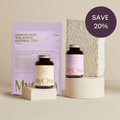
MyOva Supplement
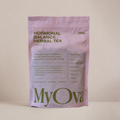
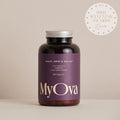
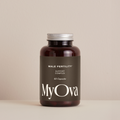
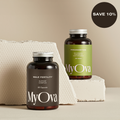
Hormone BalanceA daily formula built around ten standardised botanicals, including a 10:1 Sage leaf extract standardised to 4% rosmarinic acid, alongside Ashwagandha KSM-66®, Shatavari, Holy Basil, Red Clover and Vitamin B6, which contributes to normal hormonal activity and normal psychological function.
£36.00
Shop Hormone Balance →What Is Sage, and Why Is It Relevant?
Salvia officinalis has centuries of traditional use for excessive sweating and menopausal complaints, and since 2011 a run of clinical trials has turned that traditional use into a genuine evidence base.
Salvia officinalis is a Mediterranean herb with a history of use in traditional medicine stretching back thousands of years, including specific traditional use for excessive sweating and menopausal complaints.6
For a long time, that traditional use was plausible but unproven. The research base was thin. What existed was largely anecdotal or in vitro. Then, between 2011 and 2023, a series of clinical trials and a systematic review changed that picture meaningfully.
The active constituents most relevant to Sage's potential in hot flush relief include:
- Rosmarinic acid, a polyphenol with antioxidant and neuroprotective properties, present in high concentrations in the MyOva formulation's 10:1 Sage extract (standardised to 4% rosmarinic acid)
- Phytoestrogens, plant compounds that interact mildly with oestrogen receptors, supporting signalling pathways disrupted by declining oestrogen
- Diterpenes and flavonoids, compounds with demonstrated binding activity at neurological receptor sites relevant to thermoregulation
The key point about mechanism: Sage doesn't appear to work primarily by replacing oestrogen. Instead, research suggests it modulates the neurological pathways, specifically serotonergic and GABAergic receptor activity, that govern hypothalamic thermoregulation.3,6 It is this neurological activity, not estrogenic activity alone, that is now considered the primary driver of Sage's clinical effect on hot flushes.
What Does the Research Actually Show?
Four separate clinical trials and a 2023 systematic review found Sage reduced hot flush frequency and intensity by roughly half or more within eight weeks, with the strongest single result a 64% drop in intensity-rated hot flushes.
The 2011 Swiss Multicentre Trial
This is the foundational clinical study, and the first to provide what the researchers described as "proof" of Sage's tolerability and efficacy for menopausal hot flushes.2
Conducted across eight medical practices in Switzerland by Bommer, Klein and Suter, the open multicentre trial enrolled 71 women (ITT population n=69) with a mean age of 56.4 years. All participants were postmenopausal for at least 12 months and experiencing a minimum of five hot flushes per day.
Women took a once-daily tablet of fresh Sage leaf extract for eight weeks. Results, measured using patient diaries and the validated Menopause Rating Scale (MRS), were clinically significant:
- Total score of intensity-rated hot flushes decreased by 50% within four weeks and 64% within eight weeks (p<0.0001)2
- Mean number of mild hot flushes decreased by 46%
- Mean number of moderate hot flushes decreased by 62%
- Mean number of severe hot flushes decreased by 79%
- Very severe hot flushes were eliminated entirely over the eight-week period2
The MRS total score, which captures the broader burden of menopausal symptoms including psychological and urogenital complaints, decreased by 43% overall, with psychological subscores reducing by 47%.
The treatment was well tolerated. No serious adverse effects were reported.
This was not a placebo-controlled trial, it was open-label, which is a limitation worth naming honestly. But the magnitude and consistency of the effect, measured weekly across eight weeks, provides a credible signal.
The 2016 Double-Blind RCT
A more rigorous follow-up: a double-blind, randomised, placebo-controlled trial conducted in Iran on 100 postmenopausal women with hot flushes.4
The intervention group received three 100mg Sage tablets daily for eight weeks. The placebo group received identical-looking tablets with no active ingredient. The groups were matched at baseline with no significant demographic differences.
After eight weeks, hot flushes, night sweats and overall MRS scores decreased significantly in the Sage group compared to placebo.4 The mean duration of hot flushes dropped from 3.54 per week to 1.38 at week eight. Severity decreased from 2.25 to 1.00. The placebo group showed no comparable reduction.
The 2019 Dadfar RCT
A randomised controlled trial by Dadfar and Bamdad, published in the International Journal of Reproductive BioMedicine, examined 30 postmenopausal women given 100mg capsules of dried Sage extract daily for four weeks.5
Despite the shorter duration and lower dose compared to the 2011 trial, the results showed statistically significant reductions in hot flushes, night sweats, panic, fatigue and concentration difficulties. The Menopause Rating Scale scores improved meaningfully across multiple symptom domains.
The 2023 Systematic Review and Meta-Analysis
Published in the International Journal of Community Based Nursing and Midwifery, this review synthesised findings from clinical trials investigating Sage's effect on hot flushes in postmenopausal women.7
The review found a statistically significant reduction in hot flush frequency across the studies examined. The effect on symptom severity, by contrast, did not reach statistical significance in the pooled analysis, a distinction worth being precise about rather than rounding up. The authors highlighted the herb's phytoestrogen content and mild anti-dopaminergic central nervous system activity as the most plausible mechanisms for its effect on frequency.7
What the research doesn't show: Sage is not a hormonal therapy. It doesn't replicate oestrogen's full range of effects on bone density, cardiovascular health or urogenital tissue. The trials are smaller than those conducted on HRT, and the evidence base, while growing, is not yet equivalent in depth or scale. Managing expectations matters.
| Study | Design | Participants | Key Result |
|---|---|---|---|
| Bommer et al., 2011 | Open-label, 8 weeks | 71 women (69 ITT) | 64% reduction in intensity-rated hot flushes |
| Rad et al., 2016 | Double-blind, placebo-controlled, 8 weeks | 100 women | Duration fell from 3.54 to 1.38 per week |
| Dadfar & Bamdad, 2019 | Randomised, 4 weeks | 30 women | Significant gains across hot flushes, night sweats, fatigue and concentration |
| Moradi & Niazi, 2023 | Systematic review and meta-analysis | Pooled across trials | Frequency significantly reduced; severity not significant |
How Does Sage Work in the Brain?
Sage extract binds to several receptors involved in the brain's temperature control, including serotonin, adrenergic and GABA receptors, suggesting its effect comes from coordinated neurological activity rather than a single mechanism.
This is where the mechanism gets genuinely interesting, and where the research has moved beyond the traditional "it's a phytoestrogen" explanation into something more precise.
A pharmacological study by Tober and Schoop, examining Sage's neurological activity, found significant binding affinity of Salvia officinalis extract at multiple receptor sites directly involved in hypothalamic thermoregulation3:
- Serotonin 5-HT1A and 5-HT2C receptors, serotonin pathways play a direct role in temperature regulation; their dysregulation after oestrogen decline is a known driver of vasomotor symptoms
- Adrenergic α2A receptors, noradrenaline activity through these receptors regulates vasodilation and heat dissipation in the hypothalamus
- GABAA and GABAB receptors, the Sage extract displaced 50% of specific ligand binding at these sites (IC50 of 89 µg/ml for GABAA and 229 µg/ml for GABAB), suggesting meaningful GABAergic activity relevant to both thermoregulation and the anxiety component of menopausal symptoms
- μ-opioid receptors, activity here may contribute to mood and pain modulation during perimenopause
The researchers concluded that Sage's effect on hot flushes is best understood as multimodal neuroreceptor modulation, not a single mechanism, but a coordinated influence across several neurotransmitter systems that collectively govern the hypothalamic thermostat.3
This is not the mechanism of a placebo. It's a pharmacologically plausible, anatomically specific set of interactions that maps directly onto what we understand about the neuroscience of hot flushes.

Sage Beyond Hot Flushes: The Broader Perimenopause Picture
The same trials that measured hot flushes also recorded improvements in night sweats, mood, cognitive function and fatigue, suggesting Sage's neurological activity reaches further than temperature control alone.
Hot flushes are the headline symptom. But perimenopause is considerably more than vasomotor disruption, and Sage's clinical evidence extends into several of the other areas that matter most to this audience.
Night sweats and sleep disruption. Closely related to hot flushes, night sweats were consistently improved alongside daytime flushing in the clinical trials reviewed.2,4,5 The sleep disruption driven by nocturnal vasomotor events is one of the most debilitating aspects of perimenopause, and any meaningful reduction in night sweats translates directly to better sleep quality.
Mood and anxiety. The MRS psychological subscale improved by 47% in the 2011 Bommer trial.2 This is consistent with Sage's GABA receptor binding activity, which may support the nervous system calming effect that oestrogen previously provided. For women experiencing anxiety and emotional lability that seem out of proportion to life circumstances, and that arrived with perimenopause, this is a relevant signal.
Cognitive function and memory. Multiple studies noted improvements in concentration and forgetfulness scores alongside vasomotor benefits.5 This is consistent with Sage's established traditional use for cognitive support, and with the known neuroprotective properties of rosmarinic acid, one of the standardised active compounds in the MyOva formulation.
Fatigue. Reduced fatigue was documented as a secondary outcome in the Dadfar RCT.5 Whether this reflects improved sleep, reduced symptom burden, or a more direct mechanism is unclear, but the pattern is consistent across multiple studies.
Extract Quality: Why Standardisation to Rosmarinic Acid Matters
Not all Sage supplements deliver the same thing; fresh or hydroalcoholic extracts standardised to a verified rosmarinic acid percentage show meaningfully stronger receptor binding activity than dried herb powder.
Sage leaves contain a complex mixture of volatile oils, polyphenols, diterpenes and flavonoids, and the relative concentrations of each vary significantly depending on how and when the plant is harvested, whether fresh or dried material is used, and how the extract is processed.
The clinical research on Sage consistently used standardised, concentrated extracts rather than dried herb powder.2,3 The 2011 Bommer trial used a fresh Sage extract with high biological activity specifically due to the freshly harvested plant material. Pharmacological research has shown that fresh or hydroalcoholic extracts of Sage demonstrate meaningfully higher receptor binding activity than extracts from dried plant material, a meaningful difference in terms of clinical relevance.3
Rosmarinic acid standardisation is the key quality marker to look for. Rosmarinic acid is one of the primary bioactive compounds in Sage with antioxidant, anti-inflammatory and neuroprotective properties. Standardising an extract to a specific rosmarinic acid percentage ensures that each dose contains a consistent, verified concentration of active compounds, something impossible to guarantee with unstandardised herb powders.
The MyOva Hormone Balance supplement includes a 10:1 Sage leaf extract standardised to 4% rosmarinic acid, meaning 10 parts of plant material have been concentrated into one part of extract, with verified rosmarinic acid content at a level consistent with therapeutic research.

Sage in the Context of a Broader Perimenopause Strategy
This is where directness matters.
Sage won't replace HRT. If you're experiencing severe vasomotor symptoms that are significantly disrupting your sleep, wellbeing or quality of life, that conversation should happen with your GP, and HRT, where appropriate and without contraindications, remains the most effective medical intervention for vasomotor symptoms available.
But for women who want to understand every evidence-based tool available to them, whether alongside HRT, while considering their options, or in preference to hormonal therapy, Sage earns its place in an informed, layered approach.
That approach also includes:
- Stress and cortisol regulation, cortisol dysregulation amplifies vasomotor symptoms; adaptogenic support through Ashwagandha and other botanicals directly addresses this layer [→ Read our Ashwagandha guide]
- Phytoestrogen support, Red Clover isoflavones have their own clinical evidence base for hot flush reduction, and work through complementary pathways to Sage [→ Read: Red Clover for Menopause]
- Anti-inflammatory nutrition, systemic inflammation rises as oestrogen declines, compounding both physical and psychological perimenopause symptoms [→ Read: Anti-Inflammatory Eating for Hormonal Health]
- Sleep protection, disrupted sleep worsens every perimenopausal marker; addressing night sweats through botanical support is one direct pathway to better sleep
- Resistance training and muscle preservation, lean muscle mass is one of the most powerful metabolic protectors through the menopausal transition
[→ Read: Mastering Hormone Balance: A Comprehensive Guide to Understanding Your Hormones]
Why Sage Is in the MyOva Hormone Balance Supplement
The MyOva Hormone Balance supplement includes Sage as a 10:1 extract standardised to 4% rosmarinic acid, alongside Red Clover, Shatavari, KSM-66® Ashwagandha, Holy Basil, Fennel, Chamomile, Rosemary, Turmeric and Pyridoxal 5'-Phosphate.
Sage's specific role in the formula targets:
- Women in perimenopause or menopause experiencing hot flushes and night sweats
- Women wanting neurological thermoregulatory support as oestrogen declines
- Women looking for botanical cognitive and mood support through the perimenopausal transition
It's not a magic fix. It's an ingredient with a credible, growing research record, formulated at a concentration and standardisation level consistent with that research, in a formula where each ingredient addresses a different aspect of the hormonal transition.
[→ Explore the MyOva Hormone Balance supplement]
Who Is Sage Most Relevant For?
Most relevant if you are:
- In perimenopause or postmenopause experiencing hot flushes or night sweats
- Wanting natural vasomotor symptom support alongside or instead of HRT
- Experiencing mood shifts, anxiety or brain fog alongside physical symptoms
- Looking for cognitive support through hormonal transition
Less central if you are:
- Pre-menopausal with regular cycles and no vasomotor symptoms
- Managing primarily PMOS (PCOS)-related insulin resistance or androgen excess, where other ingredients in the formula are more directly relevant
Speak to your doctor first if you:
- Are on anticoagulant medications, as Sage may interact with blood-thinning drugs at high doses
- Have epilepsy; high-dose Sage oil contains thujone, though standardised supplement extracts are thujone-free and considered safe at normal doses
- Are pregnant or breastfeeding
The Bottom Line on Sage
Sage is not a wellness trend. It's not a vague herbal catch-all. It's a botanical with a specific, pharmacologically plausible mechanism, multimodal neuroreceptor activity in the hypothalamus, and a clinical evidence base that has grown meaningfully over the past fifteen years.
The research is not equivalent in depth to HRT trials. The effect sizes are moderate. The trials are smaller than ideal. All of that is worth saying clearly.
But for a woman navigating perimenopause who wants to understand every evidence-based option available to her, not just the pharmaceutical ones, Sage offers something real. A 64% reduction in intensity-rated hot flushes over eight weeks. Night sweat improvement. Mood and cognitive benefits as secondary outcomes.
Your body is going through something real and significant. The changes you're experiencing are physiological and hormonal, not imaginary, not inevitable in terms of severity, and not without options.
Understanding what's actually in your supplement, why it's there, and what the research says, that's how you stop guessing and start making informed decisions.
That's not a small thing.
Ready to Support Your Body Through the Transition?
Explore the MyOva Hormone Balance supplement to pair Sage with nine other standardised botanicals, and join a community of women building hormone-supportive habits that actually fit real life.
Shop Hormone Balance →Further Reading
- Ashwagandha for Women: Benefits, Safety and Dosage
- Red Clover for Menopause: Plant Oestrogen or Overhyped Herb?
- Anti-Inflammatory Eating for Hormonal Health
- Mastering Hormone Balance: A Comprehensive Guide to Understanding Your Hormones
Frequently Asked Questions
How quickly does Sage work for hot flushes?
The 2011 Bommer trial showed a 50% reduction in total hot flush score within four weeks, with 64% reduction by eight weeks.
Effects are gradual, consistent daily use for at least four weeks is recommended before evaluating response.2
Is Sage safe to take long-term?
Standardised, thujone-free Sage extracts used in supplement form have a good safety profile at normal doses, with no serious adverse effects reported across the eight-week trial periods.
For long-term use beyond three months, speaking with your GP is advisable, particularly if you are on any medications.2,4
Can I take Sage alongside HRT?
Some women use botanical support alongside HRT, particularly during dose adjustment periods or when tapering, though this should be discussed with your prescribing doctor first.
There is no known direct interaction between standardised Sage extracts and standard HRT formulations, but this is a conversation to have with your prescribing doctor.
Is fresh Sage better than dried?
Pharmacological research suggests fresh or hydroalcoholic extracts show meaningfully higher receptor binding activity than dried plant extracts, which is why extract ratio and standardisation matter.
A 10:1 standardised extract delivers more concentrated, consistent active compounds than dried herb powder.3
Can Sage help with night sweats specifically?
Yes, night sweats were consistently reduced alongside daytime hot flushes in the clinical trials reviewed.
Since night sweats and hot flushes share the same thermoregulatory mechanism, any botanical that addresses that mechanism tends to improve both.2,4,5
References
- Freedman RR. Menopausal hot flashes: mechanisms, endocrinology, treatment. J Steroid Biochem Mol Biol. 2014;142:115-120. doi:10.1016/j.jsbmb.2013.08.010
- Bommer S, Klein P, Suter A. First time proof of sage's tolerability and efficacy in menopausal women with hot flushes. Adv Ther. 2011;28(6):490-500. doi:10.1007/s12325-011-0027-z
- Tober C, Schoop R. Modulation of neurological pathways by Salvia officinalis and its dependence on manufacturing process and plant parts used. BMC Complement Med Ther. 2019;19:128. doi:10.1186/s12906-019-2549-x
- Kiani Rad S, Forouhari S, Samsami Dehaghani A, Vafaei H, Sayadi M, Asadi M. The effect of salvia officinalis tablet on hot flashes, night sweating, and estradiol hormone in postmenopausal women. Int J Med Res Health Sci. 2016;5(8):257-263.
- Dadfar F, Bamdad K. The effect of Saliva officinalis extract on the menopausal symptoms in postmenopausal women: an RCT. Int J Reprod BioMed. 2019;17(4):287-292. doi:10.18502/ijrm.v17i4.4555
- Rahte S, Evans R, Eugster PJ, et al. Salvia officinalis for hot flushes: towards determination of mechanism of activity and active principles. Planta Med. 2013;79(9):753-760.
- Moradi M, Niazi A. The effect of Salvia officinalis on hot flashes in postmenopausal women: a systematic review and meta-analysis. Int J Community Based Nurs Midwifery. 2023;11(3):160-172. doi:10.30476/IJCBNM.2023.97127.2133
This article is for informational purposes only and is not a substitute for professional medical advice, diagnosis, or treatment. Always speak with your GP or a qualified healthcare provider before starting any new supplement, particularly if you are on medication, pregnant, breastfeeding, or managing an existing health condition. Food supplements should not be used as a substitute for a varied and balanced diet.

Leila Martyn
Leila Martyn is the founder of MyOva, a UK-based hormonal health brand supporting women with PMOS (PCOS), perimenopause, PMDD and fertility challenges. Drawing on lived experience and scientific research, Leila shares trusted, evidence-based guidance to help women understand their hormones, support cycle balance, and feel informed about their health journey.
Discover your perfect product in under a minute!
References