
























Why Vitamin B6 Keeps Coming Up in PMS Research (And What Form Actually Works)
By Leila Martyn, Founder of MyOva
If you've spent any time researching PMS or PMDD support, you've probably noticed something: Vitamin B6 keeps appearing. In supplement formulas. In clinical trial references. In the recommendations of nutritional therapists and integrative GPs.
And if you've ever flipped over a B6 supplement bottle and seen the words "pyridoxine hydrochloride" versus "pyridoxal-5'-phosphate," and had absolutely no idea what the difference was or why it should matter, you're not alone.
This article is for that woman. The one who has been told B6 might help her PMS, who has maybe even tried it, and who wants to understand what the research actually says, what form is worth taking, and why the distinction between "B6" and "active B6" is more meaningful than most supplement labels let on.
This is what I wish someone had told me earlier.
Why B6 Keeps Coming Up: The Mechanism First
Before the clinical trials, before the form debate, it helps to understand why Vitamin B6 has any relationship to PMS symptoms at all. Because once you understand the mechanism, everything else follows logically.
Vitamin B6, in its active form, Pyridoxal-5'-Phosphate (P5P), is a coenzyme involved in over 150 enzymatic reactions in the body.1 That's not a small number. It's not a niche vitamin doing one obscure thing. It's a fundamental cofactor in some of the most critical biochemical processes in the human body.
For women's hormonal health specifically, a few of those processes are directly relevant to PMS and PMDD:
1. Serotonin and dopamine synthesis. P5P is the essential coenzyme for the enzyme aromatic L-amino acid decarboxylase (AADC), which carries out the final conversion step of 5-HTP into serotonin, and of L-DOPA into dopamine.2 Serotonin is the neurotransmitter most closely associated with mood stability, emotional resilience, and the regulation of anxiety, and serotonergic dysfunction is a leading neurological hypothesis for why PMDD symptoms manifest in the luteal phase. Without adequate P5P, this final conversion step is compromised for both neurotransmitters, which is part of why B6 depletion has been linked to both low mood and the flatness, low motivation, and anhedonia some women describe during luteal phase crashes.
2. GABA synthesis. The enzyme glutamic acid decarboxylase (GAD), which converts glutamate into GABA, also depends on P5P as its coenzyme.2 GABA is the brain's primary inhibitory neurotransmitter, the nervous system's brake pedal. Adequate GABA activity is what allows the brain to regulate anxiety and calm emotional reactivity. Low P5P means impaired GABA synthesis, and impaired GABA synthesis means a nervous system with diminished braking capacity, precisely when it's most needed in the luteal phase.
3. Steroid hormone metabolism. Beyond neurotransmitters, P5P has been shown to affect the activity of steroid hormone receptors, including oestrogen receptors, by modulating their binding to DNA regulatory sequences.3 This is one proposed mechanism by which B6 may influence oestrogen metabolism and the oestrogen-to-progesterone ratio that underpins many PMS symptoms.
So when researchers ask "why does B6 keep appearing in PMS research?", this is why. It sits at the intersection of the neurochemical and hormonal pathways most disrupted in the luteal phase. It is not a coincidence. It is a mechanism.

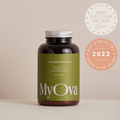
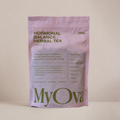
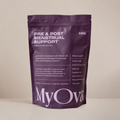
Daily Botanical Support
Ten standardised botanicals plus 10mg of active P5P vitamin B6, which contributes to normal hormonal activity and psychological function.
What Does the Research Actually Say?
The 1999 Wyatt et al. Systematic Review, BMJ
This is the foundational reference for B6 and PMS, and it has been cited in virtually every subsequent clinical review of nutritional interventions for PMS.
Published in the BMJ in 1999, Wyatt, Dimmock, Jones, and O'Brien conducted a systematic review of nine randomised placebo-controlled trials involving 940 women with PMS.4 The review assessed both the quality of the evidence and the overall effect of B6 supplementation on PMS symptom burden.
The key finding: the odds ratio for active treatment over placebo in alleviating overall premenstrual symptoms was 2.32 (95% confidence interval 1.95 to 2.54), a clinically meaningful effect size. Women taking B6 were more than twice as likely to experience improvement in overall PMS symptoms compared to those on placebo.
Doses up to 100mg per day were found likely to be beneficial, with particularly strong signals for premenstrual depression and mood-related symptoms.
The authors were explicit that several included studies were of variable methodological quality. But the consistency of direction across nine independent trials, and the magnitude of the pooled effect, made the positive signal robust enough to support its clinical recommendation.
The 2007 Kashanian et al. RCT
A subsequent placebo-controlled trial by Kashanian, Mazinani, and Jalalmanesh, published in the International Journal of Gynaecology and Obstetrics, administered 80mg pyridoxine daily to women with PMS.5
The results showed that B6 at this dose exerted a stronger effect on psychiatric PMS symptoms, including depression, anxiety, and mood volatility, compared to placebo, while both groups saw some reduction in physical (somatic) symptoms.
This study is useful because it distinguishes between B6's effects on psychological versus physical PMS symptoms. The evidence for psychological symptom improvement is more consistent and stronger, which maps onto the neurotransmitter mechanism described above. Physical symptoms like bloating and breast tenderness respond less reliably to B6 alone.
B6 and PMDD: The Neurochemical Case
The connection between B6 and PMDD is mechanistically compelling even where PMDD-specific trials of B6 alone are limited.
PMDD is understood as a disorder of heightened neurological sensitivity to normal hormonal fluctuations, particularly within the serotonin and GABA pathways. A nutrient that supports the synthesis capacity of both of those neurotransmitters, as B6 does, isn't incidentally relevant. It's addressing part of the biological substrate the condition disrupts every single luteal phase.
The research on this is actually pretty clear that B6 isn't a standalone PMDD treatment. But as a nutritional foundation for the neurotransmitter pathways PMDD disrupts, its relevance is well established.
The Form Question: Why P5P Is Not the Same as Standard B6
This is where most supplement label reading becomes genuinely important, and where most consumers are left in the dark.
When you see "Vitamin B6" on a supplement label, you are almost always looking at pyridoxine hydrochloride, the synthetic, inactive form of B6 that is cheap to manufacture and widely used.
Here's the issue: pyridoxine hydrochloride is not the form your body actually uses. It's a precursor that must be converted, via the enzyme pyridoxine 5'-phosphate oxidase (PNPO), into Pyridoxal-5'-Phosphate (P5P), the active coenzyme form, before it can participate in any of the enzymatic reactions described above.
For most healthy women, this conversion happens reasonably well. But it is a conversion step, and a number of factors can affect it:
- Genetic variation in the PNPO conversion pathway, the enzyme responsible for turning pyridoxine into active P5P
- Liver function compromise, since any condition affecting hepatic function reduces conversion efficiency
- Chronic inflammation, which depletes P5P more rapidly and can reduce conversion
- Gut dysbiosis, since gut bacteria are involved in B vitamin metabolism, and compromised gut health can reduce it
- Chronic stress, which increases B6 demand and depletion rate
- Hormonal contraceptive use, which is well documented to lower active P5P specifically (more on this below)
You're not imagining it. This is precisely the population of women most likely to have suboptimal B6 conversion: stressed, possibly post-pill, dealing with inflammatory conditions like PCOS or endometriosis, with gut health that may not be optimal.
P5P bypasses this conversion step entirely. Because it's already in the active coenzyme form, it doesn't require liver or enzymatic conversion. It's directly usable in every reaction that depends on B6.
There's also a genuine safety consideration worth naming honestly. The adverse effect most associated with high-dose B6 supplementation, sensory neuropathy (tingling, numbness in the extremities), is overwhelmingly linked to unconverted pyridoxine rather than P5P. A pharmacokinetic study looking at reported cases of B6-related neuropathy found that standard pyridoxine accounted for around 96.5% of cases, versus roughly 3.5% for P5P, and that people vary considerably in how efficiently they metabolise pyridoxine in the first place, which may help explain why some people develop symptoms at surprisingly low doses while others tolerate much higher ones.6
In short: P5P is more directly usable and appears to carry a meaningfully better safety profile than standard pyridoxine at comparable intakes. The fact that it's less commonly used in cheap supplements is a cost decision, not a scientific one.


The Pill, B6 Depletion, and Post-Pill Recovery
This is a connection that does not receive nearly enough attention, and one that is directly relevant to a significant portion of MyOva's audience.
Oral contraceptives are one of the more well-documented causes of B vitamin depletion, with B6 among the vitamins most consistently affected. A 2011 review in Nutrition Reviews concluded that current low-dose oral contraceptives can negatively affect vitamin B6 status, and that the reduced plasma P5P levels seen in oral contraceptive users may reflect genuinely lower body reserves rather than just a lab-test quirk.7
Women who have recently come off the pill, particularly those who notice worsening mood symptoms, low-grade low mood, increased PMS severity, or PMDD-like symptoms emerging after stopping, may be experiencing the downstream consequences of this depletion in the post-pill phase.
This is not a reason to fear the pill. It's a reason to understand the nutritional implications of long-term use, and to consider active B6 repletion as part of a post-pill recovery strategy, particularly given the direct role P5P plays in serotonin and GABA synthesis.
Hormonal literacy isn't complicated. It's just rarely taught.
B6 and PCOS: The Insulin and Inflammation Connection
For women with PMOS (PCOS), the relevance of B6 extends beyond mood and neurotransmitter support.
B6's role in glucose metabolism and its relationship with homocysteine, where elevated homocysteine is associated with both insulin resistance and the inflammatory environment characteristic of PMOS (PCOS), means adequate B6 status may support the broader metabolic picture, not just mood.
Additionally, chronic low-grade inflammation, a feature of PMOS (PCOS), depletes P5P more rapidly than in women without the condition, creating a feedback loop where inflammation worsens B6 status and impaired B6 function reduces the body's capacity to help regulate inflammatory and stress responses.
→ Read our dedicated guide: The Role of Vitamin B6 in Managing PMOS (PCOS)
How Much B6 Actually Matters, And the Dose Question
The clinical trials showing benefit for PMS used doses of pyridoxine ranging from 80mg to up to 100mg daily.4,5 These are considerably higher than the UK reference nutrient intake for adult women of 1.2mg per day, which reflects that the therapeutic effect seen in these trials required pharmacological rather than nutritional doses of standard pyridoxine.
Here's where the regulatory picture matters, though, and where a lot of older content on this topic hasn't kept up. In 2023, the European Food Safety Authority substantially revised its tolerable upper intake level for vitamin B6, lowering it from 25mg per day to 12mg per day for adults, well below the 80 to 100mg doses used in those older pyridoxine trials, and far below the 100mg figure some regulatory bodies elsewhere still use.
This isn't a reason to dismiss the older research; the underlying mechanism it demonstrated (that B6 status genuinely affects PMS symptom severity) still stands. But it does mean that reproducing those specific high-dose pyridoxine protocols isn't how a responsibly formulated UK or EU supplement can be built today. This is exactly where the case for P5P becomes stronger, not weaker: because it's already in the active form and doesn't require the liver conversion step that standard pyridoxine does, it may achieve meaningful support at doses well within current safety limits, rather than at doses that would now exceed them.
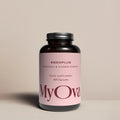
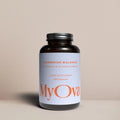
MyOva's own formulas reflect this. Hormone Balance contains 10mg of P5P daily, and Cycle Support contains 1mg of P5P daily, both comfortably within the current EFSA upper limit, and both dosed as part of a broader multi-ingredient formula rather than as a single high-dose B6 protocol.
Why P5P Appears in Both MyOva Formulas
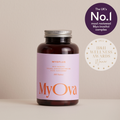
Pyridoxal-5'-Phosphate is included in both the MyOva Hormone Balance Supplement and the MyOva Cycle Support Supplement, in each case as the active P5P form rather than standard pyridoxine, because bioavailability and direct usability matter in a formula designed for women who may already have compromised conversion.
In the Cycle Support Supplement, P5P works alongside Griffonia Simplicifolia (a source of 5-HTP, the direct serotonin precursor), L-theanine, rhodiola, KSM-66® ashwagandha, and chamomile to support the neurotransmitter and stress pathways most disrupted in PMDD and severe PMS. B6 activates the conversion of 5-HTP to serotonin, so its presence in the same formula as 5-HTP is not a coincidence. Without adequate P5P, 5-HTP can't complete that conversion as efficiently.
In the Hormone Balance Supplement, P5P supports the broader hormonal picture, oestrogen metabolism, neurotransmitter balance across the cycle, and the post-pill recovery pathway, alongside the full botanical formula addressing adaptogenic stress support and phytoestrogen signalling.
In both cases: active form, a modest, regulation-appropriate dose, in a formula designed around how these pathways actually work.

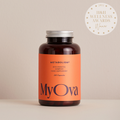
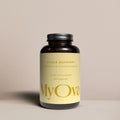
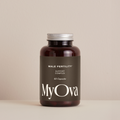
Luteal Phase Support
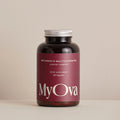
5-HTP, ashwagandha KSM-66®, rhodiola, and P5P vitamin B6, which contributes to normal psychological function and hormonal activity.
Supporting B6 as Part of a Broader Strategy
P5P doesn't work in isolation. Neither does any single nutrient. For women managing PMS or PMDD through nutritional and botanical support, B6 works best as part of a strategy that also includes:
| Strategy | Why it matters alongside B6 |
|---|---|
| Stress and cortisol regulation | Chronic stress increases B6 demand and can independently impair neurotransmitter synthesis |
| Cycle pattern tracking | Understanding your luteal phase symptoms in context is the foundation of any targeted strategy |
| Anti-inflammatory nutrition | Reducing inflammatory load supports P5P availability and reduces its depletion rate |
| Sleep quality | B6 is involved in melatonin synthesis; supporting sleep supports B6 utilisation |
| Reducing processed food load | Diets high in processed food are associated with lower B6 status; poultry, salmon, potatoes, and sunflower seeds are among the richest dietary sources |
→ Read: Holy Basil for Hormones, The Adaptogen You've Never Heard Of
→ Read: PMDD vs Severe PMS, How to Tell the Difference
→ Read: Why Your Hormones Feel Off, And What to Do About It
Who Is P5P Most Relevant For?
Most relevant if you are:
- Experiencing PMS mood symptoms, depression, anxiety, irritability, or low mood in the luteal phase
- Managing PMDD and looking to support serotonin and GABA synthesis pathways
- Post-pill, particularly if you've noticed mood or PMS symptoms worsening since stopping contraception
- Managing PMOS (PCOS) with an inflammatory or metabolic component
- Taking 5-HTP for mood support (P5P is required for its conversion to serotonin)
- Experiencing fatigue, brain fog, or mood symptoms that are cycle-dependent
Less central if you are:
- Looking primarily for vasomotor or phytoestrogen support (other ingredients are more directly relevant)
- Dealing predominantly with physical PMS symptoms, bloating, breast tenderness (the evidence for B6 is stronger for psychological than physical symptoms)
Speak to your doctor first if you:
- Are taking levodopa (L-DOPA) for Parkinson's, as B6 can interfere with this medication
- Are on anticonvulsant medications, as B6 supplementation may affect medication levels
- Are considering supplementing at doses above the current EFSA upper limit long-term
Conclusion
Vitamin B6 keeps coming up in PMS research because it is genuinely, mechanistically relevant, not as a catch-all vitamin, but as the specific coenzyme required for the synthesis of some of the key neurotransmitters disrupted in the luteal phase.
The form matters. Pyridoxine hydrochloride requires an extra conversion step to become useful. P5P doesn't. For women dealing with stress, post-pill depletion, inflammation, or any factor that impairs that conversion, the form in their supplement can be the difference between taking something that works and taking something that looks good on a label.
It's not a magic fix. No single nutrient is. But understanding why B6 is there, in what form, at what dose, and how it fits into the broader picture of neurotransmitter and hormonal support, that's hormonal literacy in practice.
And hormonal literacy isn't complicated. It's just rarely taught.
Ready to Try the Active Form?
MyOva Cycle Support pairs P5P vitamin B6 with 5-HTP, ashwagandha, and rhodiola for gentle, consistent luteal phase support.
Shop Cycle Support →180-day returns on unused, sealed items. Free UK delivery on orders of £50 and over.
Further Reading
The Role of Vitamin B6 in Managing PMOS (PCOS)
PMDD vs Severe PMS: How to Tell the Difference (And Why It Matters)
Holy Basil for Hormones: The Adaptogen You've Never Heard Of
Why Your Hormones Feel Off, And What to Do About It
Frequently Asked Questions
How long does B6 take to work for PMS? The clinical trials showing benefit used supplementation across multiple cycles, most measuring outcomes after one to three months of consistent use. Effects on mood symptoms are more likely to be noticed after two to three full cycles rather than within a single month.
Can I get enough B6 from food? The UK reference nutrient intake of 1.2mg for adult women is achievable through diet; rich sources include poultry, salmon, potatoes, bananas, and sunflower seeds. However, the doses studied for therapeutic benefit in PMS trials (80 to 100mg) are considerably above dietary intake levels and above the current EFSA upper limit for long-term supplementation, which is why this is a supplement question rather than a food question.
Is P5P safe to take every day? At doses within the current EFSA upper limit (12mg per day for general long-term supplementation), P5P has a good safety profile, and unlike standard pyridoxine, it does not appear to carry the same peripheral neuropathy risk at equivalent doses.
Why does the pill affect B6 levels? Oral contraceptive use has been linked to lower plasma P5P levels compared to non-users, and current evidence suggests this can reflect a genuine reduction in body reserves rather than just a lab artefact.
Does B6 help with physical PMS symptoms like bloating? The evidence is stronger for psychological symptoms (mood, anxiety, depression) than physical symptoms (bloating, breast tenderness). Physical symptom relief from B6 alone is less consistent across studies.
Can I take B6 with antidepressants? If you are on SSRIs for PMDD or depression, discuss B6 supplementation with your prescribing doctor. While there is no commonly documented serious interaction, SSRIs and B6 both influence serotonin pathways and individual circumstances vary.
References
- National Institutes of Health Office of Dietary Supplements. Vitamin B6: Health Professional Fact Sheet. Available at: ods.od.nih.gov/factsheets/VitaminB6-HealthProfessional
- Calderón-Ospina CA, Nava-Mesa MO. B Vitamins in the nervous system: Current knowledge of the biochemical modes of action and synergies of thiamine, pyridoxine, and cobalamin. CNS Neuroscience & Therapeutics. 2020;26(1):5-13.
- Linus Pauling Institute, Oregon State University. Vitamin B6. Micronutrient Information Center. Available at: lpi.oregonstate.edu/mic/vitamins/vitamin-B6
- Wyatt KM, Dimmock PW, Jones PW, Shaughn O'Brien PM. Efficacy of vitamin B-6 in the treatment of premenstrual syndrome: systematic review. BMJ. 1999;318(7195):1375-1381.
- Kashanian M, Mazinani R, Jalalmanesh S. Pyridoxine (vitamin B6) therapy for premenstrual syndrome. Int J Gynaecol Obstet. 2007;96(1):43-44.
- Vrolijk MF, Hageman GJ, van de Koppel S, van Hunsel F, Bast A. Inter-individual differences in pharmacokinetics of vitamin B6: A possible explanation of different sensitivity to its neuropathic effects. PharmaNutrition. 2020;12:100188.
- Wilson SM, Bivins BN, Russell KA, Bailey LB. Oral contraceptive use: impact on folate, vitamin B6, and vitamin B12 status. Nutrition Reviews. 2011;69(10):572-583.
This article is for educational purposes only and does not constitute medical advice. Always consult your healthcare provider before starting any new supplement, particularly if you have an existing medical condition or are taking medication.
Related reading: If PMS or PMDD symptoms include headaches around your luteal phase, that pattern has a name and a clear hormonal explanation. See our guide to Hormonal Headaches: 6 Real Reasons They Strike Around Your Period (And What Helps) for why B6 and magnesium are two of the most-researched nutrients for the same pattern.
Related reading: Vitamin B6 isn't the only nutrient worth understanding for hormonal health. See our guide to vitamin D and your hormones for what the research actually shows on PCOS, fertility, PMS and perimenopause.
Related reading: Vitamin B6 isn't the only option worth understanding for PMS and PMDD. See our guide to PMDD support: what helps and what the evidence says for an evidence-led look at the wider options, including vitex (chasteberry).
Related reading: P5P works on the neurotransmitter pathways that shape mood across your cycle. See our guide to hormonal anxiety: why it happens and what actually helps for more on why mood shifts before your period and what can help.
Discover your perfect product in under a minute!
References