


Myo-Inositol Explained: Benefits, Dosage & Side Effects
Myo-inositol is a naturally occurring compound your body already makes, and it has become one of the most talked-about ingredients in PMOS (recently changed from PCOS) and fertility supplements for good reason. It is a vitamin-like compound involved in how your cells respond to insulin and how your ovaries release eggs each month. In supplement form, myo-inositol is most commonly taken to support hormonal balance, cycle regularity and insulin sensitivity in women with PMOS, usually at a dose of around 2 to 4 grams a day. Below, we go through what the research actually says, how much to take, how long it takes to notice anything, and the side effects worth knowing about before you start. This is general information, not medical advice: always check with a healthcare professional before starting a new supplement, especially if you are pregnant, breastfeeding, or taking medication.
In this article
- What is myo-inositol?
- How does myo-inositol work in the body?
- What are the benefits of myo-inositol?
- Can myo-inositol help with fertility?
- How much myo-inositol should you take?
- How long does myo-inositol take to work?
- Are there any myo-inositol side effects?
- Who shouldn't take myo-inositol?
- FAQ
What Is Myo-Inositol?
Myo-inositol is a vitamin-like compound your body makes naturally, found in high concentrations in the ovaries and involved in insulin signalling and cell communication.
Inositol is not one thing but a family of nine related compounds called isomers, and myo-inositol is by far the most abundant one in the human body, making up around 99% of the total inositol found in our tissues. You will sometimes see it written as vitamin B8, although it is not technically a vitamin since your body can make it from glucose, and it is also found naturally in foods like citrus fruits, beans, whole grains and nuts.
What makes myo-inositol relevant to PMOS specifically is where it concentrates in the body. It is found at particularly high levels in the ovaries, where it plays a role in how follicles respond to hormone signals. Because insulin resistance is common in PMOS and can interfere with how the body handles inositol, many women with PMOS have lower levels of myo-inositol available to their ovaries than they should. That is the theory behind why topping it up through a supplement, like Myoplus, has become such a well-researched area of hormonal health.

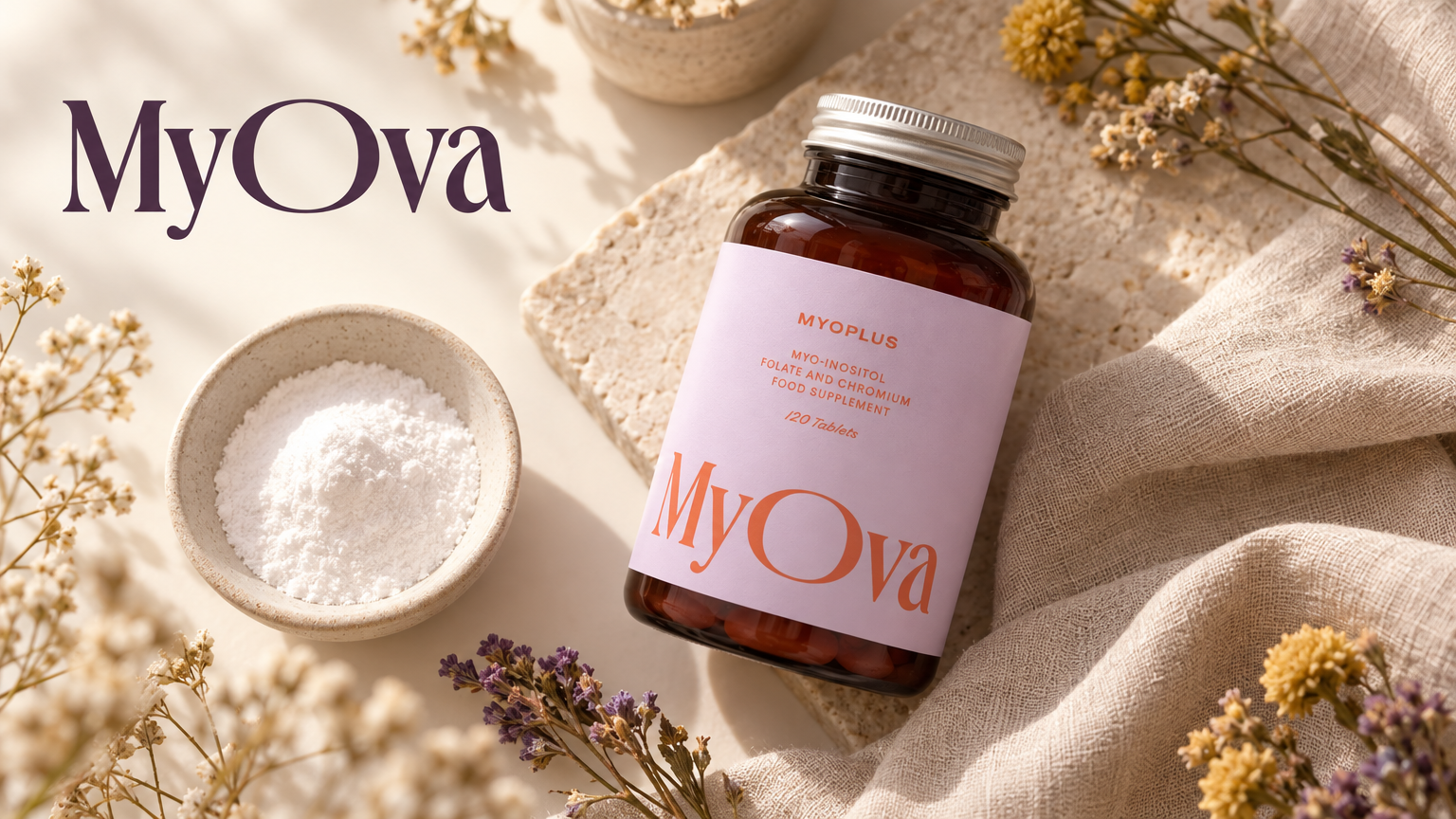
A daily myo-inositol supplement formulated to support hormonal and menstrual health, 120 tablets per bottle.
How Does Myo-Inositol Work in the Body?
Myo-inositol acts as a secondary messenger for insulin, helping cells respond properly to blood sugar, and plays a role in signalling within the ovarian follicle.
To understand why myo-inositol matters for PMOS, it helps to understand two of its jobs inside the body. The first is as a "second messenger" for insulin. When insulin binds to a cell, myo-inositol helps relay that signal inside the cell so it can actually respond and take up glucose properly. When this signalling pathway does not work well, cells become less responsive to insulin, which is a hallmark of insulin resistance and is thought to affect a large proportion of women with PMOS, regardless of body weight.
The second job is inside the ovary itself. Myo-inositol is involved in how the follicle responds to follicle-stimulating hormone (FSH), which is part of the signalling chain that supports normal ovulation. A 2024 systematic review published via the National Institutes of Health looked specifically at the effectiveness of myo-inositol in women with PMOS across multiple clinical trials, examining outcomes like insulin sensitivity, hormone levels and cycle regularity. This is the kind of research MyOva formulations are built on: your diagnosis is a starting point, not a verdict, and understanding the actual mechanism is the first step to hormonal literacy.
What Are the Benefits of Myo-Inositol?
Research on myo-inositol in women with PMOS has most consistently looked at insulin sensitivity, cycle regularity and ovulatory function.
Myo-inositol is one of the more heavily studied natural compounds in the PMOS and fertility space, which is part of why it keeps coming up. Here is what the research has actually focused on, without the hype:
- Insulin sensitivity and blood sugar: the area with the most consistent research, since improving how cells respond to insulin is the mechanism myo-inositol is best understood for.
- Cycle regularity: several studies have looked at menstrual cycle length and regularity in women with PMOS taking myo-inositol over a period of months.
- Ovulatory function: research has examined markers of ovulation, since irregular or absent ovulation is one of the core features of PMOS.
- Egg quality in assisted conception: some fertility clinics use myo-inositol protocols alongside IVF, and it has been studied in that context specifically.
- Androgen levels: a number of trials have measured markers linked to symptoms like acne and excess hair growth, alongside insulin and cycle outcomes.
What myo-inositol is not is a guaranteed fix. The research is genuinely promising and one of the better-evidenced natural options in this space, but results vary between individuals, and it works best as one part of a wider approach that includes diet, movement and, where needed, medical treatment. It is not a magic fix, but it gives your body what it is often missing.
If you are also looking at other natural options, our guide to berberine for PMOS covers a different mechanism worth knowing about, and our full range of PMOS supplements shows how these ingredients are often combined.

Can Myo-Inositol Help With Fertility?
Myo-inositol is widely studied in fertility and preconception contexts, most often for its role in supporting ovulatory function and egg quality alongside standard fertility care.
If you are actively trying to conceive, you have probably seen myo-inositol mentioned in fertility forums and preconception supplement lists, and there is a reason for that beyond trend. Because myo-inositol is involved in the signalling that supports normal follicle development, researchers have looked at it specifically in women undergoing assisted conception, including IVF, often measuring outcomes like egg and embryo quality alongside standard protocols. It is frequently paired with folic acid in preconception formulas, since folic acid is separately recommended for anyone trying to conceive to support the baby's neural tube development in early pregnancy.
It is worth being clear about what this does and does not mean. Myo-inositol is not a fertility treatment and it will not diagnose, treat or resolve underlying causes of infertility. What the research explores is whether it can be a useful, well-tolerated addition alongside your existing care, particularly if irregular ovulation linked to PMOS is part of the picture. If fertility is your main reason for considering it, this is exactly the kind of thing worth raising with your GP, fertility clinic or a dietitian, who can look at your specific situation rather than a general guide like this one.
How Much Myo-Inositol Should You Take?
Most clinical studies use around 2 to 4 grams of myo-inositol a day, commonly split into two doses.
Dosage in the research varies a little by study, but a consistent pattern has emerged over the last two decades of trials. Here is how it typically breaks down:
| Use case | Typical amount studied | Notes |
|---|---|---|
| General PMOS / insulin support | 2g, twice daily (4g/day total) | The most common protocol across clinical trials |
| Preconception protocols | Around 4g/day | Often paired with folic acid in fertility-focused research |
Consistency matters more than the exact time of day. Taking your dose with food can help reduce the mild digestive side effects some people notice at higher amounts. Always check the label of your specific product for its exact serving size and follow the manufacturer's guidance, since formulations differ, and speak to a healthcare professional before adjusting your dose, particularly if you are pregnant or trying to conceive.
How Long Does Myo-Inositol Take to Work?
Most research measuring changes in cycle regularity and insulin markers used consistent daily dosing for 3 to 6 months before assessing results.
This is one of the most searched questions about myo-inositol, and understandably so: nobody wants to take something for weeks without knowing what to expect. The honest answer is that myo-inositol is not fast-acting. It is not a magic fix. It works gradually, by supporting cell signalling and insulin sensitivity over time, rather than producing an immediate effect.
Most of the clinical research that measured meaningful outcomes, such as cycle length or insulin markers, tracked participants over 3 to 6 months of consistent daily use. Some people report noticing changes to energy levels or cravings a little sooner, but cycle-related changes typically take at least one to three full cycles to become apparent, simply because that is how long it takes to observe a pattern. If you are not seeing any change after 6 months of consistent use, that is worth discussing with a healthcare professional rather than assuming it does not work for you.
Are There Any Myo-Inositol Side Effects?
Myo-inositol is generally well tolerated, and the most commonly reported side effects are mild digestive symptoms like bloating, nausea or an upset stomach.
Compared with many PMOS medications, myo-inositol has a favourable safety profile, which is part of why it is so widely used. That does not mean it is symptom-free for everyone. Reported side effects, usually at higher doses, include:
- Mild nausea or stomach discomfort
- Bloating or gas
- Diarrhoea or loose stools
- Occasional headaches
- Mild dizziness, though this is uncommon
These effects are usually mild, tend to ease as your body adjusts, and are less likely if you take your dose with food and build up gradually rather than starting at the full amount straight away. Your body is trying to tell you something when it reacts to a new supplement, so if side effects are persistent or severe, stop taking it and speak to a healthcare professional.
Who Shouldn't Take Myo-Inositol?
Myo-inositol is considered safe for most people, but anyone who is pregnant, breastfeeding, on medication or managing an existing health condition should check with a doctor before starting it.
Myo-inositol has a long safety record in research settings, including studies during pregnancy, but "well tolerated in studies" is not the same as "right for everyone." Speak to a healthcare professional before starting if you are pregnant, breastfeeding, taking medication for diabetes or blood sugar (since myo-inositol can influence insulin sensitivity), or managing any other diagnosed condition. This article is general information, not medical advice, and is not intended to diagnose, treat, cure or prevent any condition.
Food supplements should not be used as a substitute for a varied and balanced diet. If you are pregnant, breastfeeding, taking medication, or have a medical condition, consult a healthcare professional before use.
A straightforward, single-ingredient myo-inositol supplement for daily hormonal and menstrual support.
Frequently Asked Questions
What is myo-inositol used for?
Myo-inositol is most commonly used as a daily supplement to support hormonal balance, insulin sensitivity and menstrual cycle regularity in women with PMOS, and it is also used in some preconception and fertility support routines, often alongside folic acid.
Does myo-inositol cause weight loss?
Myo-inositol is not a weight loss supplement, and it should not be taken with that as the main goal. Some research has looked at its role in insulin sensitivity, which can be relevant to weight management for some women with PMOS, but any change in weight is likely to be gradual and individual, not guaranteed.
Can I take myo-inositol without having PMOS?
Yes, myo-inositol is generally considered safe for most adults without PMOS, and some people take it for general cycle or insulin support. As with any supplement, it is worth speaking to a healthcare professional first, particularly if you are pregnant, breastfeeding or taking other medication.
When is the best time to take myo-inositol, morning or night?
There is no strong evidence that timing affects how well myo-inositol works. Since most studied protocols split the dose in two, many people take one dose in the morning and one in the evening, with food, and simply keep the timing consistent day to day.
Is myo-inositol safe to take long term?
Myo-inositol has been used safely in clinical research over periods of 6 months to a year or more, and it is generally considered safe for longer-term use. That said, always follow the guidance on your specific product and check in with a healthcare professional periodically, especially if you are taking it long term.
What's the difference between inositol and myo-inositol?
"Inositol" is the umbrella term for a family of nine related compounds, and myo-inositol is the most abundant and most researched form found in the human body, making up around 99% of the inositol in our tissues. When a product simply says "inositol" without specifying, it is worth checking the label, since myo-inositol is the form most PMOS research is based on.
Ready to Give Your Hormones What They're Often Missing?
Myoplus delivers a straightforward, researched dose of myo-inositol in every serving, no unnecessary extras.
Shop Myoplus →Free UK shipping over £50 · 20% off your first order
This article is for general information only and is not intended as medical advice. Food supplements should not be used as a substitute for a varied and balanced diet. If you are pregnant, breastfeeding, taking medication, or have a medical condition, consult a healthcare professional before use.
Discover your perfect product in under a minute!
References